
 en
en cs
cs da
da de
de it
it pl
plMǎshàng 马上/馬上 ‘immediately, right away, at once’, xiān 先 ‘first’, and yǒushí 有时/有時 ‘sometimes’ are adverbs of time, that indicate when an action happens or how it is ordered in time. Mǎshàng 马上/馬上 and xiān 先 always appears before the verb and after the subject, while yǒushí 有时/有時 can appear either before or after the subject.
Structure
Basic form
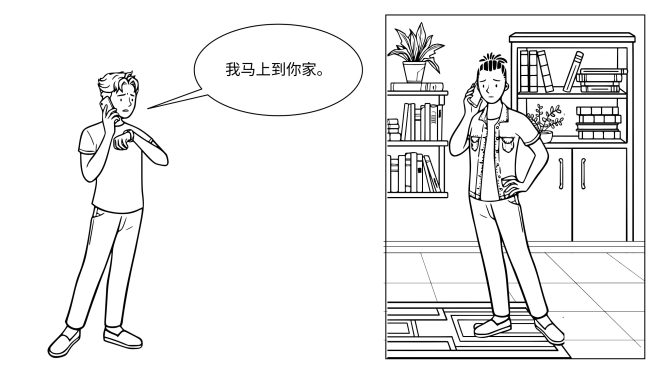
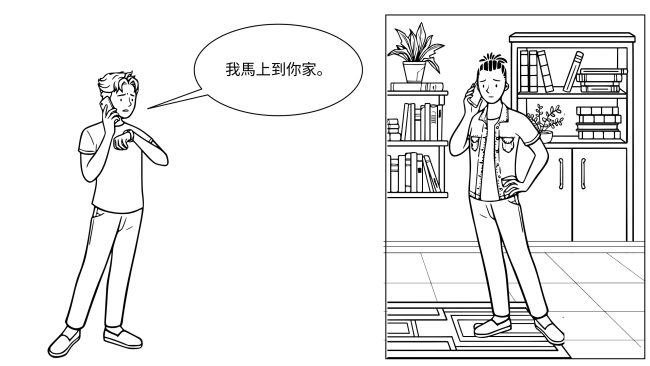
Mǎshàng 马上/馬上 ‘immediately, right away, at once’ and xiān 先 ‘first’ always precede the verb and follow the subject.
Yǒushí 有时/有時 comes from the longer expression yǒu de shíhòu 有的时候/有的時候, which can also appear as yǒu shíhòu 有时候/有時候. All these three forms mean ‘sometimes’ and can appear after the subject. Since the verb yǒu 有 ‘to have’ is included in these expressions as it says “there are times when…”, they can also appear before the subject.
Negation
To express that an action will not happen immediately, bù 不 ‘not’ usually appears with modal verbs, such as huì 会 ‘can’ or xiǎng 想 ‘desire’, or verbs like dǎsuàn 打算 ‘to plan’ before mǎshàng 马上/馬上.
To negate the immediacy of an action already occurred, méiyǒu 没有/沒有 ‘not’ can appears added directly before mǎshàng 马上/馬上.
To negate the temporal priority of an action already occurred, méiyǒu 没有/沒有 ‘not’ can be used directly before xiān 先.
When expressing a verb is not taking place first, bù 不 ‘not’ is placed before xiān 先.
Yǒushí 有时/有時 ‘sometimes’ itself cannot be negated, but negation adverbs bù 不 ‘not’ and méi 没/沒 ‘not’ can be placed after yǒushí 有时/有時 to negate the following verb.
Question
To form a yes–no question, the question particle ma 吗/嗎 can be added at the end of the sentence.
With modal verbs
Since mǎshàng 马上/馬上 expressing that an action will happen very soon, its meaning is always connected to the main verb. Therefore, when a sentence has a modal verb, mǎshàng 马上/馬上 can appear before or after the modal verb depending on what the speaker wants to emphasize.
Note that when the speaker is giving an instruction, permission, or plan, mǎshàng 马上/馬上 is usually placed right before the main action. In this use, mǎshàng 马上/馬上 shows that the action should be done right now, not later.
Modal verbs can appear either after or before xiān 先.
Modal verbs are usually placed after yǒushí 有时/有時.
With prepositional phrases
Mǎshàng 马上/馬上, xiān 先 and yǒushí 有时/有時 normally appear before the prepositional phrase.
Functions
1. Mǎshàng 马上/馬上 expressing immediacy and promptness
Mǎshàng 马上/馬上 indicates that an action occurs ‘immediately, right away, at once’, and it is often used in spoken Chinese. It can refer to actions that have not happened yet or that already happened, and it is often followed by the adverb jiù 就.
When mǎshàng 马上/馬上 is used with the adverb jiù 就 and the modal particle le 了 at the end of the sentence, it emphasizes that an action is about to happen very soon, in the very near future, conveying a strong sense of imminence.
Mǎshàng 马上/馬上 is usually directly preceded by bù 不 to say that someone “will do something not immediately”; in these cases, a modal verb or the verb dǎsuàn 打算 ‘to plan’ appear between bù 不 and mǎshàng 马上/馬上.
In contrast, it can be directly preceded by méiyǒu 没有/沒有 to say that someone “did something not immediately”.
Note that bù 不 can appear directly before mǎshàng 马上/馬上 in hypothetical sentences expressing that if someone “do not do something immediately” then something else will happen, or in rhetorical questions conveying an implied judgement.
Also check Hypothetical sentences with rúguǒ……, jiù…… 如果……,就…… ‘if…, then…’ and ……dehuà, jiù…… ……的话/的話,就…… ‘if…, then…’
2. Xiān 先 expressing priority in the chronological order of actions
Xiān 先 indicates that an action takes place ‘first’, giving information about the chronological sequence. It refers to concrete and successive actions in imperative or declarative sentences.
For more on xiān 先, check Sequential structure with xiān…… zài/ránhòu…… 先…… 再/然后/然後…… ‘first… then…’
Note that bù 不 is usually used before xiān 先 in hypothetical sentences to express that if someone “does not do something first” then something else will happen, or in rhetorical questions conveying an implied judgement.
Also check Hypothetical sentences with rúguǒ……, jiù…… 如果……,就…… ‘if…, then…’ and ……dehuà, jiù…… ……的话/的話,就…… ‘if…, then…’
3. Yǒushí 有时/有時 indicating low-frequency actions
Yǒushí 有时/有時 indicates that an action occurs ‘sometimes’, just occasionally and without regularity.
In coordinated structures meaning ‘sometimes…, sometimes…’, yǒushí 有时/有時 appears after the subject when the subject is the same in both clauses. If the sentence involves two different subjects, yǒushí 有时/有時 should be used at the beginning of each clause.