

 en
en cs
cs da
da de
de it
it pl
plZài 再 ‘again’ is an adverb that indicates the repetition of an action or state mostly in the future. It can also focus on increasing the quantity of an action meaning ‘some more; another’, or indicate the sequential order of actions that have not yet taken place, meaning ‘and then’.
Structure
Basic form
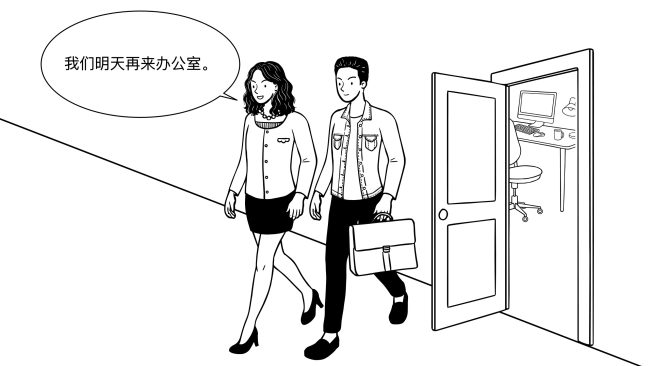
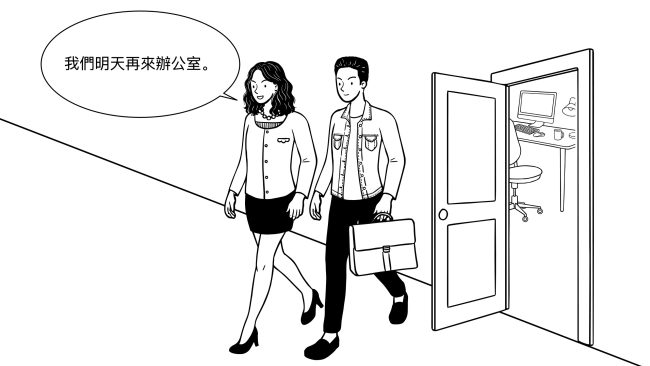
Zài 再 precedes the verb, and it typically expresses that an action or state will be repeated in the future.
It can also be used to strengthen the degree of an adjective or to enlarge the scope of an action, increasing the quantity of that action. When zài 再 precedes a verb, the quantity can refer directly to the object, as in “eat one more”, or it can express the duration of an action through the general time-measure expression yíhuìr 一会儿 ‘a moment, a while’.
Zài 再 can also be placed before an adjective to indicate an additional increase in degree or amount, meaning ‘a bit more…’ or ‘some more…’. In such sentences, information (either precise or imprecise) as a complement follows the adjective to express the speaker’s desire.
Negation
Zài 再 usually appears after bù 不 ‘not’ and méi 没/沒 ‘not’.
After bù 不
The structure “bù 不 + zài 再 + verb + le 了” means ‘no more, no longer’, and it indicates that the action or state will be stopped. The modal particle le 了 at the end of the sentence marks the change of state, expressing that something does not happen anymore.
After méi 没/沒
The structure “méi 没/沒 + zài 再 + verb” indicates that the action has not been repeated again after a certain time or a completed action. It is often used with a first clause that sets the time point, such as sentences with yǐhòu 以后 ‘after’.
Question
To form a yes–no question, the question particle ma 吗/嗎 can be added at the end of the sentence.
With modal verbs
When there is a modal verb in the sentence, zài 再 is usually placed after it and before the verb.
In a second clause
In a complex sentence with two actions or states, zài 再 can be used in the second clause to mark the second step in a sequence of actions or states. This use typically refers to actions that have not yet happened.
Sometimes other adverbs, such as xiān 先 ‘first’, are used in the first clause to explicitly highlight chronological order, but it is not required when the sequence can also be understood from context.
To learn more about this use, check Sequential structure with xiān…… zài/ránhòu…… 先…… 再/然后/然後…… “first… then…”
Functions
1. Zài 再 expressing recurrence in the future.
Zài 再 indicates an action or state recurs in the future, something that has happened already and will happen ‘again’.
It is commonly used in sentences suggesting or inviting someone to repeat an action.
To learn more about repetition in the past or present, check Adverb yòu 又 “again”.
2. Zài 再 indicating an increase in quantity or degree
Zài 再 can be used to strengthen the degree of an adjective or to enlarge the scope of an action. It appears before verbs or adjectives meaning ‘some more’, ‘another’, or ‘again’, with a focus on increasing the quantity of an action or object.
It often appears when asking for more of something or another instance of an action. In this sense, zài 再 functions similarly to ‘another’ in English.
3. Zài 再 indicating sequence
Zài 再 can be used to show that one action or state happens after another. It often introduces the second action or state in a sequence, meaning ‘then, after that’. This use typically refers to actions that have not yet happened, such as plans, instructions, and routines.