

 en
en cs
cs da
da de
de it
it pl
plYòu 又 ‘again’ is an adverb that primarily indicates the recurrence of an action, usually in the past or present. It can also mean ‘and then; and also’ referring to series of actions, states or conditions that have already occurred; or when repeated in the structure yòu… yòu… 又……又…… to coordinate two adjectives or two verbs meaning ‘both… and…’.
Structure
Basic form
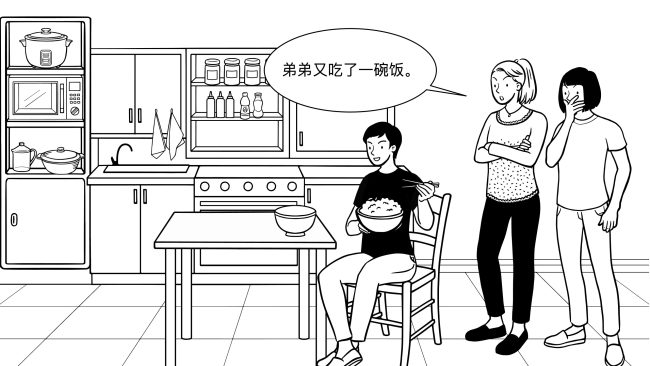
Yòu 又 ‘again, once again’ precedes the verb that has been repeated. The particle le 了 often appears in the sentence either as the modal particle le 了 at the end of the sentence, or as the aspectual particle le 了 placed immediately after the verb.
To learn more on the use of le 了, check Aspectual particle le 了1 and Modal particle le 了2
Negation
Yòu 又 itself cannot be negated. To indicate that something did not happen again in the past or present, méi 没/沒 ‘not’ is placed in front of the verb and an optional modal particle le 了 may be placed at the end of the sentence.
When bù 不 ‘not’ is placed in front of the verb, it indicates an emotional tone of annoyance, such as a complaint on continuing not doing an action.
Question
To form a yes–no question, the question particle ma 吗/嗎 can be added at the end of the sentence.
With modal verbs
When there is a modal verb in the sentence, yòu 又 is usually placed before it.
In a second clause
Besides being used in a simple sentence, yòu 又 can also be used in the second clause of a complex sentence. In this use, yòu 又 means ‘and also’, adding another action or state of the same subject to a series of events that have already occurred.
To learn more about its use to coordinate two adjectives or two verbs, check Coordinative structure with yòu… yòu… 又……又…… ‘both… and…’
Functions
1. Yòu 又 expressing recurrence in the past or present
Yòu 又 ‘again, once again’ indicates that an action or state has occurred again in the past or present.
In most sentences with yòu 又, both the original action or state and the repetition have already taken place.
When yòu 又 precedes méi 没/沒 ‘not’, it indicates that something did not happen again in the past or present.
Note that, when the repetition of an action or state has not occurred yet, zài 再 ‘again’ is used instead of yòu 又. In this case, the sentence does not end with le 了.
To learn more about repetition in the future, check Adverb zài 再 “again”, “some more; another”
2. Yòu 又 expressing addition of actions or states
When yòu 又 introduces a second clause, it can describe the addition of another action or state, meaning ‘and also’. In this function, it may appear to present two actions in succession, but the order does not necessarily reflect their actual chronological order. Instead, the focus is on the coexistence or combination of these events, rather on when they happen.
When yòu 又 introduces an additional action that has already occurred and this action is negated by bù 不 ‘not’, the literal meaning is “and also not do something”, but it can be translated as ‘not even’.