

 en
en cs
cs da
da de
de it
it pl
plHuì 会/會 ‘can; know how to’ is a modal verb that always combines with another verb. It is usually used to express an acquired ability or a possibility perceived as a prediction that something may or may not happen in the future.
Structure
Basic form
Like other modal verbs, huì 会/會 is generally placed before the verb it refers to.
Negation
Huì 会/會 can only be negated by the negative adverb bù 不, which must be placed before huì 会/會.
Questions
There are two ways of asking questions with huì 会/會. One is to add the question particle ma 吗/嗎 at the end of the sentence.
The other is to use the “modal verb bù 不 modal verb” structure before the verb.
With adverbs
Adverbs, such as dōu 都 ‘all, both’, zhǐ 只 ‘only’ or hěn 很 ‘very’, are usually placed before huì 会/會.
With verbs preceded by a prepositional phrase
Like other modal verbs, when a prepositional phrase precedes a verb, huì 会/會 should be placed before this phrase.
Functions
1. Huì 会/會 expressing acquired ability
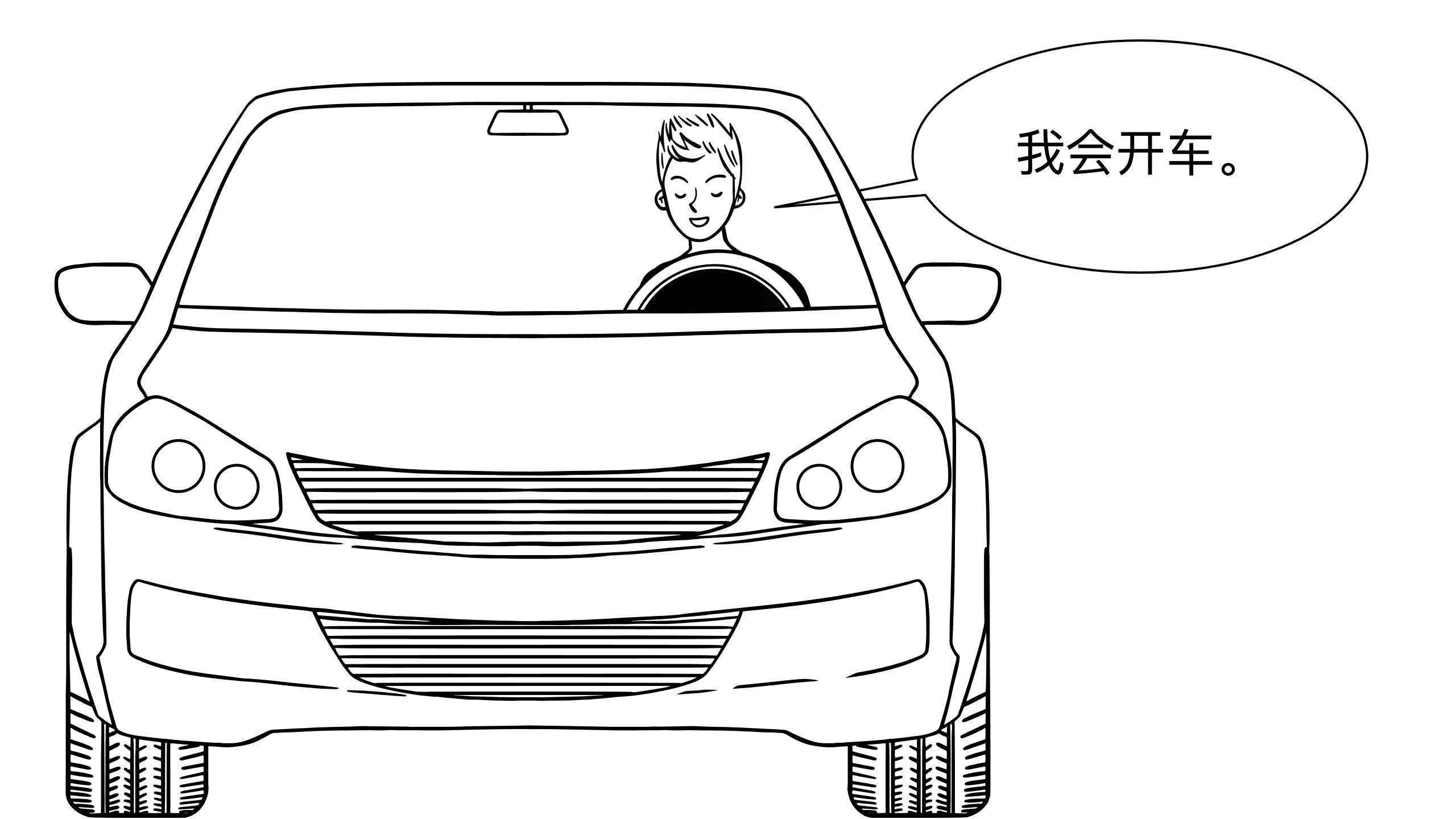
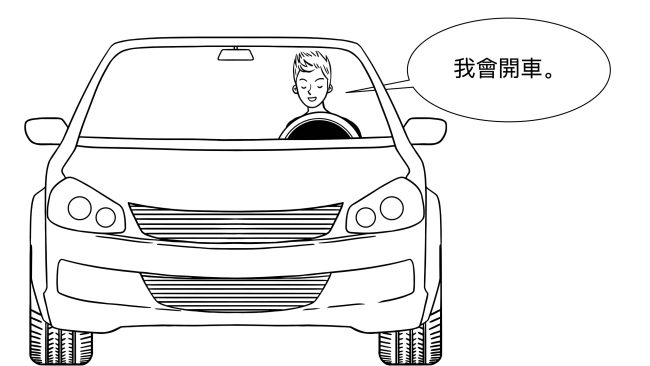
The modal verb huì 会/會 is used to indicate an acquired ability or skill the subject has obtained; for example, driving, dancing, speaking a language, etc., as if saying “knowing how to…”.
Degree adverbs or adverbial phrases such as hěn 很 ‘very’ or bú tài 不太 ‘not very’ are placed before huì 会/會 to indicate a degree of mastering a skill.
For other ways of expressing ability or capability, check 能
Check also comparison of 能,会 and 可以
2. Huì 会/會 indicating prediction or belief about a future event
The modal verb huì 会/會 indicates the possibility, eventuality or prediction that something may or may not happen in the future, as if saying, “(someone believes that/someone is sure that) something will/won’t happen”. The use of huì 会/會 in this context is optional, since one can simply say tā míngtiān lái 他明天来 ‘he will come tomorrow’. Huì 会/會 is thus not wholly equivalent to the modal verb will in English. Huì 会/會 is often used to express a strong belief or certainty that something will occur.
To express the degree of likelihood of a future event to happen, adverbs or adverbial phrases that are related to certainty or possibility, such as kěnéng 可能 ‘possibly, probably’, hěn kěnéng 很可能 ‘very likely’, bú tài kěnéng 不太可能 ‘not very likely’ and yěxǔ 也许/也許 ‘maybe, perhaps’, can be used with huì 会/會.