

 en
en cs
cs da
da de
de it
it pl
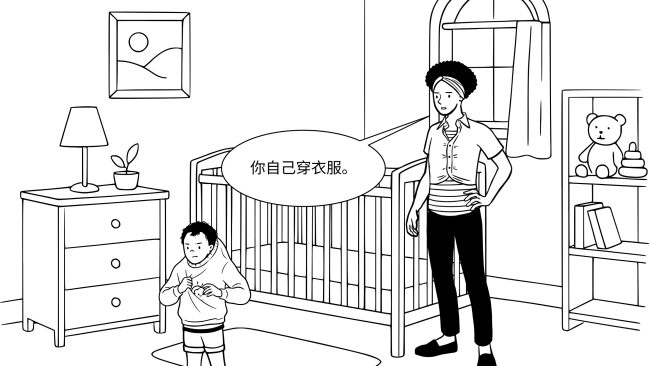
plZìjǐ 自己 ‘oneself, by oneself’ is a reflexive personal pronoun used when an action refers back to the same person as the subject, or when the speaker wants to highlight that someone does something on their own.
Structure
Basic form
In Chinese, there is only one reflexive pronoun: zìjǐ 自己 ‘oneself’. It is not marked for person or gender.
| Chinese | Pinyin | English |
| 自己 | zìjǐ | oneself |
To indicate who ‘oneself’ refers to, zìjǐ 自己 is often preceded by the corresponding personal pronoun or a noun.
As subject or object in a sentence
Zìjǐ 自己 ‘oneself’ can occur in subject or object position in a sentence. It is usually preceded by a personal pronoun or, sometimes, a noun.
When zìjǐ 自己 occurs as the object without a personal pronoun, it is understood to refer back to the subject.
As an adverbial phrase in a sentence
Zìjǐ 自己 can appear before a verb or an adjective functioning as the predicate. In this adverbial position, it means ‘on one’s own’, ‘by oneself’, or ‘alone’.
As a noun modifier in a sentence
Zìjǐ 自己 can also be used before a noun, usually followed by the structural particle de 的, and sometimes preceded by a personal pronoun. In this case, it means ‘one’s own’ and corresponds to English possessives such as ‘my own,’ ‘your own,’ or simply ‘own.’
Functions
1. Zìjǐ 自己 ‘oneself’ expressing emphasis on a person or thing
When zìjǐ 自己 appears in the subject or object position and is preceded by a personal pronoun or a noun, it emphasises that specific person or thing mentioned.
Also check Personal pronouns
2. Zìjǐ 自己 indicating a reference to the subject
When zìjǐ 自己 appears in the object position without a personal pronoun, it refers implicitly to the subject. The personal pronoun is omitted because the context already makes it clear that the action is directed toward the subject.
3. Zìjǐ 自己 expressing that an action is done by a person or thing on their own
Zìjǐ 自己 can also be placed before a verb or an adjective functioning as the predicate. In this position, it serves as an adverb, meaning ‘on one’s own’, ‘by oneself’, or ‘alone’. It expresses that the subject performs the action independently, without help from others.
4. Zìjǐ 自己 expressing a possession or close relationship to the subject
Zìjǐ 自己 can be followed by the structural particle de 的 to indicate ‘one’s own’, expressing that something belongs to or relates to a particular person or thing mentioned before as the subject of the sentence. In English, this corresponds to possessive determiners such as ‘my’, ‘your’, ‘his’, etc., often translated as ‘my own’, ‘your own’, ‘his own’, etc
When zìjǐ 自己 is preceded by a personal pronoun and followed by de 的, the emphasis on the possessor is stronger. In this case, English translation usually includes ‘own’ to reflect this nuance.
Also check Structural particle de 的
5. Zìjǐ 自己 expressing impersonality
Zìjǐ 自己 can also be used to convey a sense of impersonality.