The pattern …, yě… ……,也…… ‘…, and (also)…’ connects two clauses where the adverb yě 也 introduces the second clause and often indicates sameness or similarity between two or more things related to the same subject or to different subjects.
Structure
Basic form
The adverb yě 也 introduces a second clause and indicates sameness or similarity between two or more things related to the same subject or to different subjects.
Same subject
If both clauses refer to the same subject, yě 也 is at the beginning of the second clause.
subject
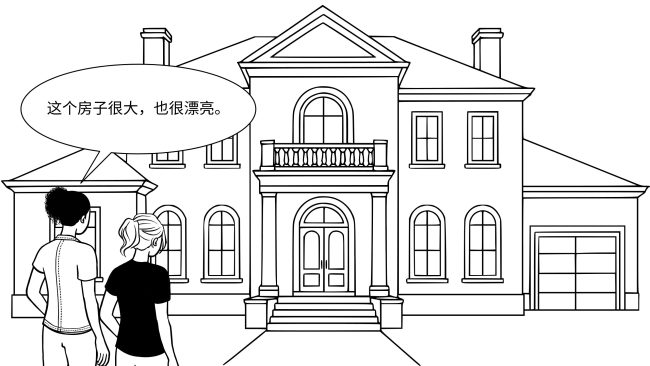
这个房子
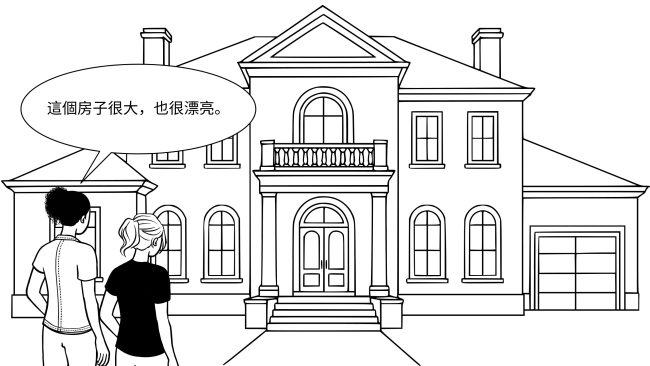
這個房子
Zhè gè fángzi
adjective 2
漂亮。
漂亮。
piàoliàng.
The house is large and (also) beautiful.
verb phrase 1
喜欢跳舞,
喜歡跳舞,
xǐhuān tiào wǔ,
verb phrase 2
喜欢唱歌。
喜歡唱歌。
xǐhuān chàng gē.
She likes dancing and (also) singing.
Different subjects
If each clause has its own subject, yě 也 is placed after the subject of the second clause.
verb phrase 1
很高,
很高,
hěn gāo
verb phrase 2
很高。
很高。
hěn gāo.
He is tall, and his brother is also tall.
verb phrase 1,
喜欢听音乐,
喜歡聽音樂,
xǐhuan tīng yīnyuè,
verb phrase 2
喜欢听音乐。
喜歡聽音樂。
xǐhuan tīng yīnyuè.
He likes listening to music, and so does his younger sister.
With modal verbs
When both yě 也 and the modal verb appear in a sentence, yě 也 should precede the modal verb.
verb phrase 1
学英文,
學英文,
xué Yīngwén
verb phrase 2
学中文。
學中文。
xué Zhōngwén.
He wants to learn English, and also Chinese.
verb phrase 1
喝茶,
喝茶,
hē chá,
verb phrase 2
喝茶。
喝茶。
hē chá.
Older brother wants to have tea, younger brother as well.
Negation
When this pattern is used with bù 不 ‘not’ or méi 没/沒 ‘not’, it means ‘neither… nor…’. Adjective are negated with bù 不 ‘not’, verbs can be negated with both bù 不 ‘not’ and méi 没/沒 ‘not’.
This dish is neither cheap nor tasty.
verb phrase 1
会唱歌
會唱歌
huì chàng gē
verb phrase 2
会跳舞。
會跳舞。
huì tiào wǔ.
She can neither sing nor dance.
verb phrase 2
买房子。
買房子。
mǎi fángzi.
They neither bought a car nor a house.
Question
To form a yes–no question, the question particle ma 吗/嗎 can be added at the end of the sentence.
subject
这瓶酒
這瓶酒
Zhè píng jiǔ
verb phrase 1
很不错,
很不錯,
hěn bú cuò,
verb phrase 2
很便宜
很便宜
hěn piányi
This bottle of wine is quite good, is it also cheap?
verb phrase 1
喜欢踢足球,
喜歡踢足球,
xǐhuan tī zúqiú
verb phrase 2
喜欢打篮球
喜歡打籃球
xǐhuan dǎ lánqiú
Do you like playing soccer and basketball?
Functions
1. …, yě… ……, 也…… ‘… and (also)…’ expressing sameness or similarity
In this pattern, the adverb yě 也 expresses two similar qualities or properties of the same subject or of different subjects. When used with adjectives functioning as predicates, both adjectives are typically preceded by a degree adverb such as hěn 很 ‘very’.
今天的作业很多,也很难。
今天的作業很多,也很難。
Jīntiān de zuòyè hěn duō, yě hěn nán.
Today’s homework is a lot, and it’s also difficult.
这套房子不贵,也不小。
这套房子不貴,也不小。
Zhè tào fángzi bú guì, yě bù xiǎo.
This house isn’t expensive, and it’s not small either.
Note that, when describing two coexisting qualities of the same subject, also the pattern yòu… yòu… 又……又…… ‘both… and…’ can be used. However, when yě 也 is used to indicate that two different subjects share the same quality or property, yòu… yòu… 又……又…… ‘both… and…’ cannot be used.
她很漂亮,她的女儿也很漂亮。
她很漂亮,她的女儿也很漂亮。
Tā hěn piàoliang, tā de nǚ’ér yě hěn piàoliang.
She is beautiful, and her daughter is beautiful too.
中文的发音很难,汉字也非常难。
中文的發音很難,漢字也非常難。
Zhōngwén de fǎyīn hěn nán, Hànzì yě fēicháng nán
Chinese pronunciation is difficult, and Chinese characters are also very difficult.
This pattern can also express two similar states, actions, wills, or psychological activities of the same subject.
这个地方没有公共汽车,也没有地铁。
這個地方沒有公共汽車,也沒有地鐵。
Zhè gè dìfang méi yǒu gōnggòng qìchē, yě méi yǒu dìtiě.
There are no buses here, and no underground either.
老师教学生语法,也教学生生词。
老師教學生語法,也教学生生詞。
Lǎoshī jiào xuésheng yǔfǎ, yě jiào xuésheng shēngcí.
The teacher teaches students grammar and also vocabulary.
他不想吃肉,也不想吃鱼。
他不想吃肉,也不想吃魚。
Tā bù xiǎng chī ròu, yě bù xiǎng chī yú.
He doesn’t want to eat meat or fish.
我会说中文,也会写汉字。
我會說中文,也會寫漢字。
Wǒ huì shuō Zhōngwén, yě huì xiě Hànzì.
I can speak Chinese and also write Chinese characters.
It can express that two different subjects share the same state, action, will or psychological activity.
我是学生,她也是学生。
我是學生,她也是學生。
Wǒ shì xuésheng, tā yě shì xuésheng.
I am a student, and she is a student too.
我妈妈喜欢中国茶,我爸爸也喜欢中国茶。
我媽媽喜歡中國茶,我爸爸也喜歡中國茶。
Wǒ māma xǐhuan Zhōngguó chá, wǒ bàba yě xǐhuan Zhōngguó chá.
My mother likes Chinese tea, and my father also likes Chinese tea.
我想去中国留学,他也想去中国留学。
我想去中國留學,他也想去中國留學。
Wǒ xiǎng qù Zhōngguó liúxué, tā yě xiǎng qù Zhōngguó liúxué.
I want to study in China, and so does he.
我不会唱歌,他们也不会唱歌。
我不會唱歌,他們也不會唱歌。
Wǒ bú huì chàng gē, tāmen yě bù huì chàng gē.
I can’t sing, and neither can they.


 en
en cs
cs da
da de
de it
it pl
pl