

 en
en cs
cs da
da de
de it
it pl
plYě 也 is an adverb that always precedes the main verb or adjective in a sentence. Corresponding to English ‘also, too,’ it is used to indicate sameness.
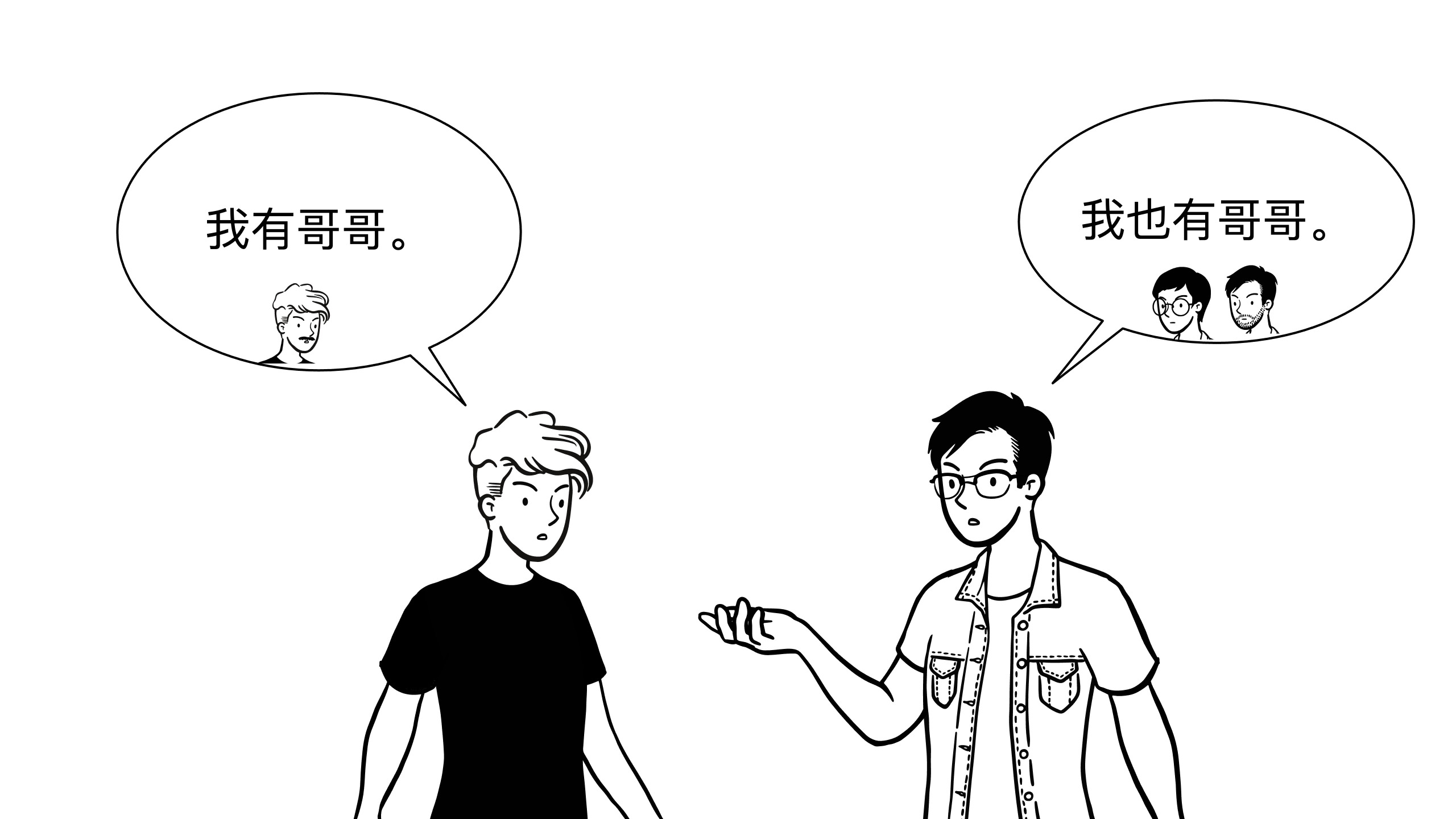
Structure
Basic form
The adverb yě 也 is placed before the main verb or adjective.
Negation
When co-occurring with a negative adverb such as méi 没 ‘not’ or bù 不 ‘not,’ yě 也 is placed before it.
Question
The adverb yě 也 usually occurs in Yes-No questions, for example those ending with the question particle ma 吗/嗎.
With modal verbs and other adverbs
If there is a modal verb in a sentence, yě 也 is usually placed before the modal verb.
If a sentence contains not only the adverb yě 也 ‘also’, but also other adverbs such as dōu 都 ‘all’, zhǐ 只 ‘only’, or adverbs of degree like hěn 很 ‘very’, their order is as follows:
With prepositional phrases
Yě 也 should be placed before the prepositional phrase.
Functions
Yě 也 indicating sameness
Yě 也 is often used to indicate that something is identical or comparable to a previously mentioned thing or statement.
When yě 也 is used in a second clause, it cannot stand alone but occurs only in combination with an adjective, a verb, or a modal verb. It cannot be placed at the end of a sentence, either. In such sentences, a verb follows yě 也 in the second clause.
In this example, omitting xǐhuan 喜欢/喜歡 at the end of the second clause would be incorrect.
The phrase wǒ yě shì 我也是 ‘me too, same here’ is a commonly used, fixed response. For example: