

 en
en cs
cs da
da de
de it
it pl
plExplanations
The adverb zuì 最 ‘the most’ is a superlative degree marker. It shows the highest degree of a quality or state when comparing three or more items. It usually modifies adjectives or verbs expressing feelings, evaluations, impressions, attitudes, and other mental activities.
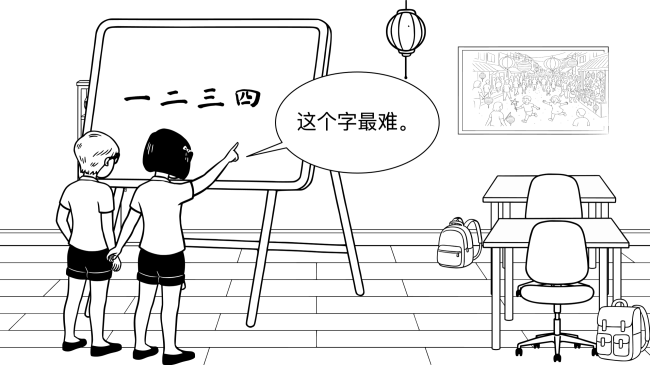
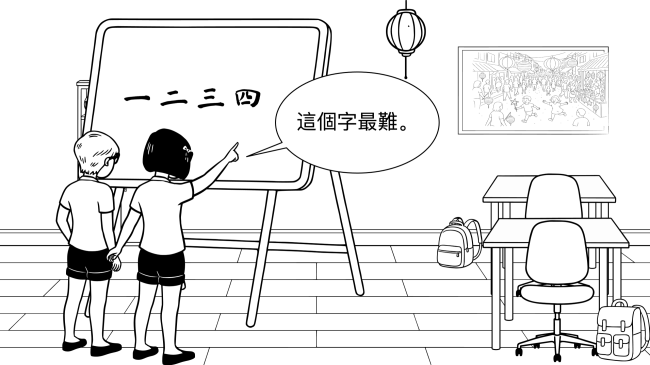
Structure
Basic structure
Zuì 最 is placed before an adjective or a verb to mark the superlative. It can only occur with specific types of verb, typically verbs of feeling/attitude (xǐhuān 喜欢 ‘to like’, xiǎng 想 ‘to want’, ài 爱 ‘to love’, pà 怕 ‘to be afraid’).
No other degree adverbs (e.g., hěn 很 ‘very’, fēicháng 非常 ‘extremely’) can be added before zuì 最. Shì 是 is also not added before zuì 最.
Zuì 最 + adjective/verb can also appear before a noun as a modifier. When zuì 最+ adjective/verb modifies a noun, de 的 is added before the noun.
Negation
Because zuì 最 marks the maximal degree, it cannot be negated directly. However, in contrastive contexts or rhetorical questions, bú shì zuì … de 不是最… 的 ’X is not the most…’ can occur.
In this case with an adjective, the structure is bú shì zuì+ adjective+ de 不是最 + adjective + 的.
When a verb is used in this pattern, the object should be moved to the beginning of the sentence and serves as a topic: Topic (object) + bú shì 不是 + Subject + zuì 最 + Verb + de 的.
Note: Zuì 最 itself cannot be directly negated, but it can be used to modify a negative adjective or state.
Questions
There are three ways of forming questions with zuì 最: 1) add the particle ma 吗 at the end of a sentence; 2) place shì bú shì 是不是 ‘whether’ before zuì 最 (often the sentence final particle de 的 is required here); 3) use a question word (e.g., shénme 什么 ‘what’, nǎ ge哪个 ‘which’)
1. Adding the particle ma 吗
2. Placing shì bú shì 是不是 ‘whether’ before zuì 最
3. Using question words
With adverbs
Scope adverbs such as yě 也 ‘also’ and dōu 都 ‘both; all’ can stand before zuì 最.
Functions
1. Expressing high degree
Zuì 最 functions like English ‘the most’. It can be used to indicate the extreme degree of one item within several options, or when the superlative meaning is clear from context.