

 en
en cs
cs da
da de
de it
it pl
plThe pattern yuè lái yuè… 越来越/越來越…… ‘more and more…’ indicates a gradual change in degree over time. It is followed by an adjective, a verb expressing feelings and emotions, or a verb phrase composed by “modal verb + verb”.
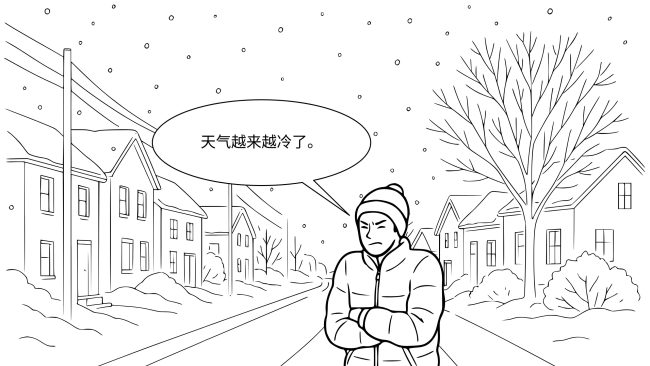
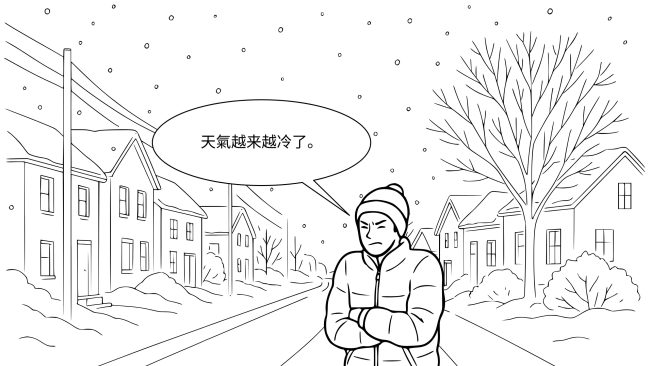
Structure
Basic form
The pattern yuè lái yuè… 越来越/越來越…… indicates a gradual change in degree, expressing that something is becoming “more and more…” compared to a previous point in time. It can be followed by an adjective, a verb expressing feelings and emotions – such as ài 爱/愛 ‘to love’, xǐhuān 喜欢/喜歡 ‘to like’, guānxīn 关心/關心 ‘to care’ or pà 怕 ‘to fear’ – or a verb phrase composed by “modal verb + verb”. The modal particle le 了 is often used at the end of sentences to emphasize the sense of change that the pattern already conveys.
Also check Modal particle le 了2
Note that verbs describing an action, such as gōngzuò 工作 ‘to work’, pǎo bù 跑步/跑步 ‘to run’ or xiě zì 写字/寫字 ‘to write’, cannot be used after this pattern. In addition, the adjectives and verbs describing a state that follow the pattern cannot be preceded by adverbs of degree, such as hěn 很 ‘very’ or fēicháng 非常 ‘very, extremely’.
Negation
Bù 不 ‘not’ is placed before the adjectives or verb phrases that follow the pattern yuè lái yuè… 越来越/越來越…… Sometimes, its meaning can be translated as ‘less and less…’.
Question
Yes–no questions can be formed by adding the question particle ma 吗/嗎 at the end of the sentence, or by using shì bu shì 是不是 before the pattern yuè lái yuè… 越来越/越來越……
With modal verbs
When yuè lái yuè… 越来越/越來越…… is used with modal verbs, it appears before the modal verb in the sentence to show a gradual change in ability, possibility, or permission over time.
As complement after de 得
The pattern yuè lái yuè… 越来越/越來越…… followed by an adjective can serve as a descriptive complement after the “verb + de 得” structure to express a gradual change in how an action is performed over time.
Also check Structural particle de 得
Functions
1. Yuè lái yuè … 越来越…… expressing a gradual change in degree over time
The pattern yuè lái yuè… 越来越/越來越…… indicates a progressive change in degree over time. It often expresses an increasing or intensifying comparison meaning ‘more and more…’, and is followed by an adjective or by a verb phrase containing a verb describing a state or a modal verb.
A sentence with this pattern often ends with the modal particle le 了, which further emphasizes the idea of change.
When yuè lái yuè… 越来越/越來越…… is followed by bù 不, it indicates a decreasing tendency in the comparison, meaning ‘less and less…’.
This pattern can also appear in interrogative sentences to ask about an ongoing process of change.
When yuè lái yuè… 越来越/越來越…… followed by an adjective appears after the structural particle de 得, it functions as a descriptive complement. It shows how the action expressed by the verb before de 得 results in a gradual change in degree over time.
Note that the adverbs of degree, such as hěn 很 ‘very’ or fēicháng 非常 ‘very, extremely’, cannot appear before adjectives and verbs describing a state that follow the pattern yuè lái yuè… 越来越/越來越……