

 en
en cs
cs da
da de
de it
it pl
plNéng 能 ‘can’ is a modal verb that always combines with another verb. It is usually used to express possibility, ability, capability or permission.
Structure
Basic form
Like other modal verbs, néng 能 is generally placed before the verb it refers to.
Negation
Néng 能 can be negated by the negative adverb bù 不, which must be placed before néng 能.
Questions
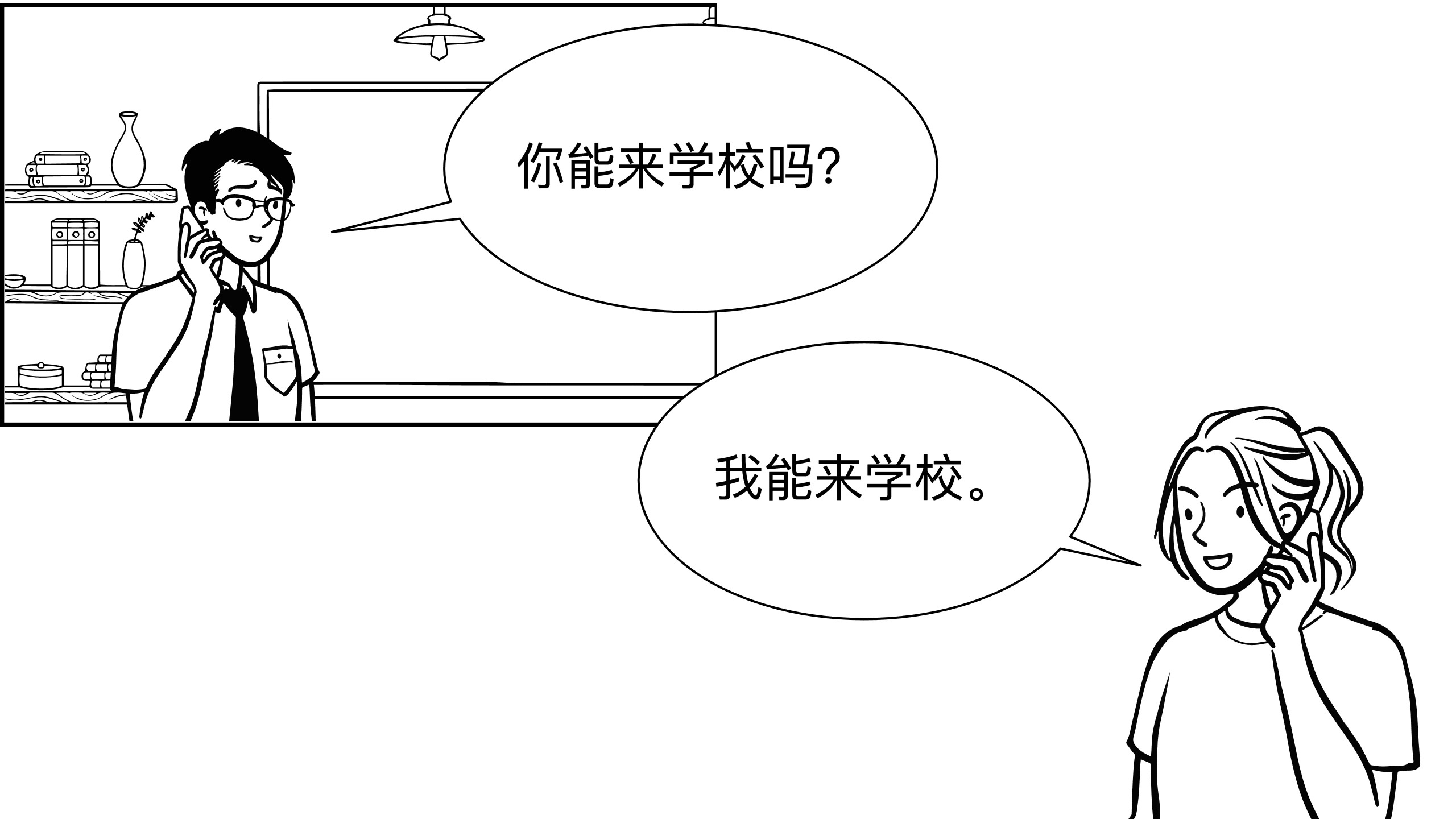
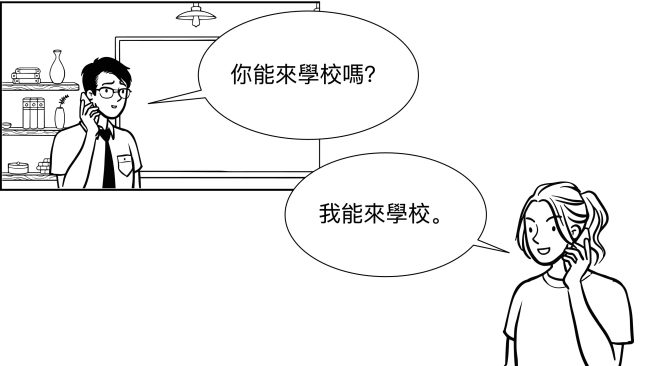
There are two ways of asking questions with néng 能. One is to add the question particle ma 吗/嗎 at the end of the sentence.
The other is to use the “modal verb bù 不 modal verb” structure before the verb.
With adverbs
Adverbs such as dōu 都 ‘both, all’ and zhǐ 只 ‘only’ are usually placed before néng 能.
With verbs preceded by a prepositional phrase
Like other modal verbs, when a prepositional phrase precedes a verb, néng 能 should be placed before this phrase.
Functions
1. néng 能 expressing a possibility
Néng 能 is often used when making a request, as if saying, “would it be possible…?” Common short answers to a request with néng are kěyǐ ‘it’s possible, yes’ or bù xíng ‘not possible, no’.
The modal verb néng 能 is also used to indicate that something is objectively possible or impossible due to the circumstances.
For other usages indicating possibility, check 可以
2. néng 能 expressing ability or capability
The modal verb néng 能 conveys the subject’s general or physical capability as if saying “to be capable of…”. When a quantitative specification is added in an affirmative sentence, it indicates that the level defined by the specification can be achieved.
Degree adverbs or adverbial phrases such as hěn 很 ‘very’ or bú tài 不太 ‘not very’ can be used before néng 能 to focus on the degree of an ability. It is often used for statements and exclamations.
For other usages indicating ability or capability, check 会
For comparison, check comparison 能, 会 and 可以
3. néng 能 expressing permission
When asking for permission, néng 能 is used in questions, like in English ‘can’ or ‘may’. The short answer to such a question is xíng 行 or kěyǐ 可以 ‘yes (you can)’ or bù xíng 不行 ‘No (you can’t)’’.
The negation form bù néng 不能 ‘not allowed’ is often used for expressing prohibitions, which is also interchangeable with bù kěyǐ 不可以 ‘not allowed’. The negation form bù kěyǐ 不可以 sounds less formal.
For other usages indicating permission, check 可以
For comparison, check comparison 能, 会/會 and 可以