

 en
en cs
cs da
da de
de it
it pl
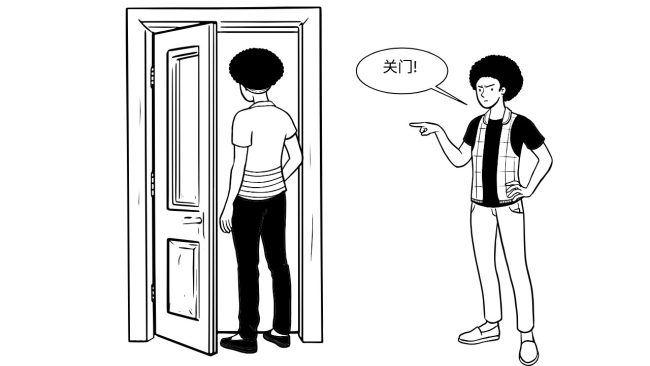
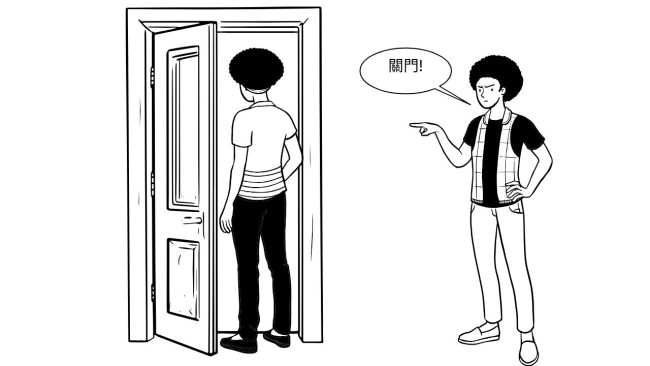
plAn imperative sentence is used to tell someone to do or not to do something. It gives a command, demand, request, suggestion, or warning urging someone to perform or refrain from performing a specific action. At the most basic level it consists simply of a verb or verb phrase.
In this entry we will mainly look at qǐng 请/請 ‘please’ used to urge someone do something and bié 别 ‘don’t’ used to urge someone to refrain from doing something.
Structure
Basic form
At the most basic level it consists simply of a verb or verb phrase.
Negation
If you want to urge someone not do something, use bié 别 or bú yào 不要 both meaning ‘don’t’ in front of the verb. Bú yào 不要 is the full or formal version, while bié 别 is a shorter and more casual version.
The verb qǐng 请/請 ‘please’
The verb qǐng 请/請 ‘please’ is used to make a polite or formal request or suggestion. It is used when we want someone to do something. The person addressed, the subject, is usually left out and the sentence begins with qǐng 请/請.
To soften a negative imperative, you can place qǐng 请/請 ‘please’ before bié 別 ‘don’t’.
For the use of bié 別 ‘don’t’ with an adjective predicate also check: The Negation Adverb bié 別 ‘don’t’ expressing Negative Commands
Question
Imperatives with qǐng 请/請 ‘please’ or bié 别 ‘don’t’ are statements, not questions. However, a tag-question, such as hǎo ma? 好吗? or hǎo bù hǎo? 好不好? ’okay?’ can be used at the end of the sentence to soften the tone.
With adverbs
If adverbs are used in imperatives, they usually come after qǐng 请/請 ‘please’ or bié 别 ‘don’t’.
With prepositional phrase
In imperatives qǐng 请/請 ‘please’ or bié 別 ‘don’t’ usually comes before a prepositional phrase.
Functions
1. Expressing imperative with a verb or verb phrase
The most basic Chinese imperative uses only a verb or a verb phrase to tell someone to do or not to do something. However, Chinese imperative sentences use a variety of expressions to soften the tone or make it more polite, such as the modal particle ba 吧 or the verbal measure word yíxià(r) 一下(儿)/一下(兒).
Also check Final particle ba 吧
Also check Verbal measure word yíxià(r) 一下(兒)
2. Expressing polite imperative with qǐng 请/請 ‘please’
Qǐng 请/請 ‘please’ is used to make polite or formal requests and suggestions. Often used when addressing strangers or superiors respectfully or in service situations. It is common in places like schools, offices, customer service.
In English, people often say ‘please’. However, in Chinese, qǐng 请/請 is used when you want to sound polite or formal.
3. Expressing negative imperative
Both bié 别 and bú yào 不要 are both negative imperative markers. They both mean ‘don’t’, but bú yào 不要 is a bit more formal while bié 别 is more common in everyday speech.
Bié 别 carries a strong tone and can sound harsh. Depending on the context, it is used to give commands, warnings, advice or requests not to do something. It is used in everyday, casual conversation.
Bú yào 不要 sounds a little stronger, clearer, and slightly more formal or serious than bié 别. It can sound like a firm rule or instruction.
Compare the two:
In everyday speech bié 别 is the most common negative imperative marker.
You can soften the tone by using qǐng 请/請 ’please’ before bié 別.