

 en
en cs
cs da
da de
de it
it pl
plYǒude 有的 ‘some’ is an indefinite pronoun in Chinese used to refer to some members of a larger group, and it may appear with or without a noun after it. It often occurs in the structure yǒude… yǒude… 有的……有的…… ‘some…’ some…
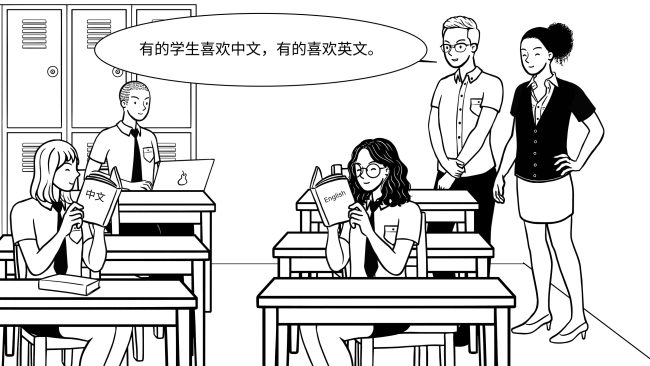
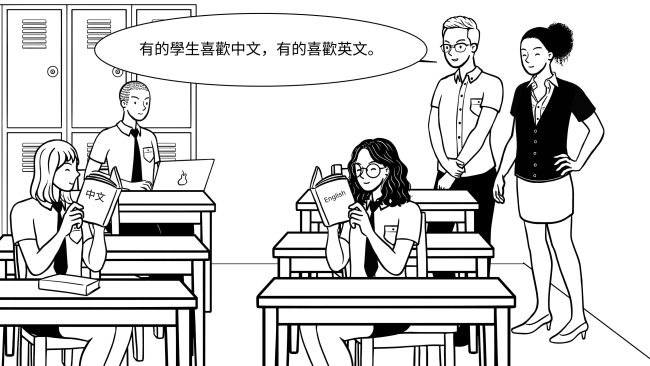
Structure
Basic form
Although yǒude 有的 is defined as a demonstrative pronoun in Chinese grammars, such as zhè 这 ‘this’ or nà 那 ‘that’, it functions similarly to the English indefinite determiner or pronoun ‘some’.
Yǒude 有的 ‘some’ typically occurs in the subject position of a sentence, and it may appear with or without a noun following it.
With a noun
Yǒude 有的 usually precedes a noun.
Without the noun
Yǒude 有的 can also stand alone because the noun it refers to is clear from the context and it is omitted.
Yǒude 有的 is often used two or more times in correlated sentences to describe different subgroups within a larger group of people or things. This structure yǒude… yǒude… 有的…… 有的…… is equivalent to the English pattern ‘some… some…’.
The noun following the second yǒude 有的 is often omitted to avoid redundancy.
Sometimes, contextual information is provided before the yǒude… yǒude… 有的…… 有的…… structure. In this case, the nouns after each yǒude 有的 can both be omitted, as the reference is already clear from the context.
With adverbs
When mentioning three or more subgroups, the adverb hái 还 ‘in addition’ is often added before the last clause.
In topic-comment structure
If yǒude 有的 needs to be included in the object, the whole structure of the sentence is typically rephrased moving the object to the beginning of the sentence.
Functions
1. Expressing comparisons and contrasts within a group’s subgroups
The yǒude… yǒude… 有的…… 有的…... structure is equivalent to the English pattern ‘some… some…’ . It is used to describe different subgroups within a larger group of people or things, and it is commonly used to make comparisons or contrasts among them.
When the subject is clear from the context, for example in response to a question, or is mentioned at the beginning of the sentence, the noun after yǒude 有的 can be omitted in both sentences. Otherwise, only the second noun can be omitted.