

 en
en cs
cs da
da de
de it
it pl
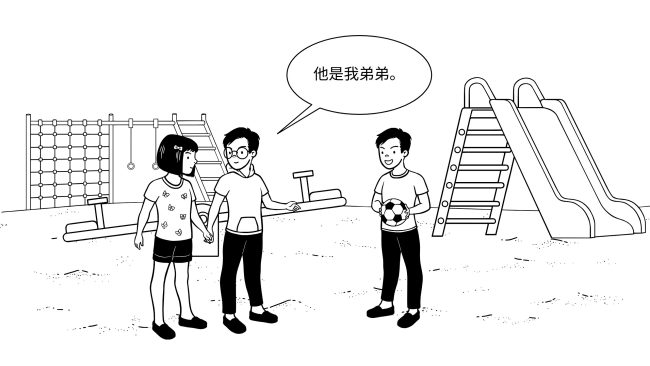
plPersonal pronouns, such as wǒ 我 ‘I, me’, nǐ 你 ‘you’, tā 他 ‘he, him’, are used to refer to the speaker, the listener, or other people or things. They can be used as both the subject and object (both direct and indirect) without changing form.
Structure
Basic form
Personal pronouns are used by the speaker to refer to oneself, to the listener, or to other people or things.
Singular forms
| Chinese | Pinyin | English |
| 我 | wǒ | I / me |
| 你 | nǐ | you |
| 您 | nín | you (polite form) |
| 他 | tā | he / him (for male) |
| 她 | tā | she / her (for female) |
| 它 | tā | it (for animal, object, or abstract thing) |
Nín 您 ‘you’ is the polite form of nǐ 你 ‘you’, used to show respect when addressing strangers, elders, teachers, or superiors. Lately, a new character for female ‘you’ is also used, mainly in Taiwan and Hong Kong: nǐ 妳.
All third person singular pronouns are pronounced tā in spoken Chinese. Gender or meaning is usually understood from the context. The inanimate tā 它 is used rarely compared to English. In written Chinese, different characters are used to show gender or non-human reference:
Tā 他: for male
Tā 她 : for female
Tā 它: for animal, object, or abstract thing
Plural forms
Plural pronouns are formed by adding the suffix men 们/們 after the singular form.
| Chinese | Pinyin | English |
| 我们/我們 | wǒmen | we / us (not necessarily including the listener) |
| 咱们/咱們 | zánmen | we / us (including the listener) |
| 你们/你們 | nǐmen | you (plural) |
| 他们/他們 | tāmen | they / them (male or mixed) |
| 她们/她們 | tāmen | they / them (female) |
| 它们/它們 | tāmen | they / them (for animal, object, or abstract thing) |
In Chinese, there are two personal pronouns to express ‘we’: women 我们 /我們 ‘we’ does not necessarily include the listener, while zánmen 咱们/咱們 ‘we’ always includes both the speaker and the listener.
The plural form nínmen 您们/您們 ‘you’ is mostly found only in written or formal language. In spoken Chinese, using nín 您 is preferred, followed by a numeral and the polite measure word for people wèi 位, such as nín sān wèi 您三位 ‘you three’ (polite).
The plural forms tāmen 他们/他們 and tāmen 她们/她們 are used to refer to groups of people as ‘they, them’: tāmen 他们/他們 includes males or mixed-gender groups, while tāmen 她们/她們 refers exclusively to groups of females.
In sentences
In Chinese, personal pronouns do not change their form according to grammatical role. This means that the same pronoun is used for both the subject and object (both direct and indirect) of a sentence. For example, English distinguishes ‘I’ (subject) and ‘me’ (object), but Chinese uses wǒ 我 for both.
With the structural particle de 的
| Chinese | Pinyin | English |
| 我的 | wǒ de | my |
| 你的 | nǐ de | your |
| 您的 | nín de | your (singular, polite possessive determiner) |
| 他的 | tā de | his |
| 她的 | tā de | her |
| 它的 | tā de | its |
| 我们的/我們的 | wǒmen de | we / us (not necessarily including the listener) |
| 咱们的/咱們的 | zánmen de | we / us (including the listener) |
| 你们的/你們的 | nǐmen de | your (plural) |
| 他们的/他們的 | tāmen de | their (male or mixed) |
| 她们的/她們的 | tāmen de | their (female) |
| 它们的/它們的 | tāmen de | their (for animal, object, or abstract thing) |
A personal pronoun followed by the structural particle de 的 can serve as a noun modifier, showing possession or a close relationship between people or things, with the meaning similar to ‘my’, ‘your’, or ‘his/her’ in English.
Note that, in colloquial Chinese, de 的 is often omitted when the modified noun refers to people or familiar places, such as péngyou 朋友 ‘friend’, xuéxiào 学校 ‘school’, jiā 家 ‘home’, or gōngsī 公司 ‘company’.
Functions
1. Personal pronouns referring to people or things
Personal pronouns are used by the speaker to refer to oneself, to the person being addressed, or to the person or thing being spoken about. In Chinese, they can function as either the subject or the object of a sentence without changing form.
Also check Personal pronoun zìjǐ 自己‘oneself, by oneself’
2. Tā 他, tā 她, and tā 它 expressing gender distinction or neutrality in third person pronouns in writing
The third person singular pronoun is always pronounced tā, but in writing, different radicals distinguish the gender of the person: tā 他 indicates ‘he, him’, while tā 她 indicates ‘she, her’.
Note that in case of mixed-gender groups, tāmen 他们 ‘they, them’ is used.
Finally, to talk about inanimate objects, animals, or abstract ideas, tā 它 ‘it’ is used.
Note that, in spoken Chinese, tā 它 ‘it’ and tāmen 它们/它們 ‘they, them’ are often omitted when the reference to inanimate objects is clear from context.
3. Wǒmen 我们/我們 and zánmen 咱们/咱們 expressing ‘we’
Chinese has two different personal pronouns meaning ‘we’: one is wǒmen 我们/我們 which does not necessarily include the listener; the other is zánmen 咱们/咱們 which is always used to explicitly include the listener. However, this difference is not always stressed by native speakers, and sometimes wǒmen 我们/我們 is used in place of zánmen 咱们/咱們 even when the listener is included.
Note that zánmen 咱们/咱們 ‘we’ is generally used only as the subject of a sentence.
4. Nín 您 expressing the polite form of ‘you’
The polite pronoun nín 您 ‘you’ is used to address someone with respect, for example when speaking to teachers, elder people, or someone you do not know well.
Note that the plural form nínmen 您们/您們 ‘you’ is mostly found only in written or formal language. In spoken Chinese, using nín 您 is preferred, followed by a numeral and the polite measure word for people wèi 位.
Also check Measure words – nouns
5. Personal pronouns with de 的 expressing possession or a close relationship
When personal pronouns are followed by de 的, they indicate that something belongs to a person or that there is a close relationship between people or things.
If the noun is clear from context, it can be omitted, and the structure composed by the personal pronoun followed by de 的 works like ‘mine / yours’.
However, in colloquial Chinese, when expressing a close personal relationships (such as family members or friends) or belonging to an institution (such as a company or school), de 的 is often omitted.