

 en
en cs
cs da
da de
de it
it pl
plProgressive aspect marker zài 在
The progressive aspect marker zài 在 is an adverb that can precede a verb describing an action to indicate that the action is in progress. The action in progress can either be happening right now or at given time.
The progressive aspect marker zài 在 can be used alone or together with the adverb zhèng 正 as zhèngzài正在. Both can be further intensified by the particle ne 呢 at the end of the sentence. Zhèngzài 正在 is slightly more formal than zài 在.
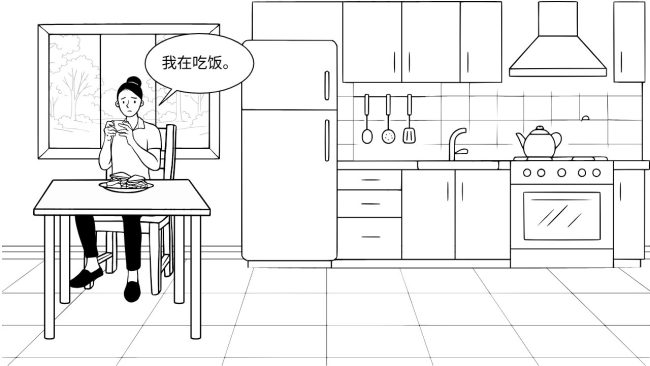
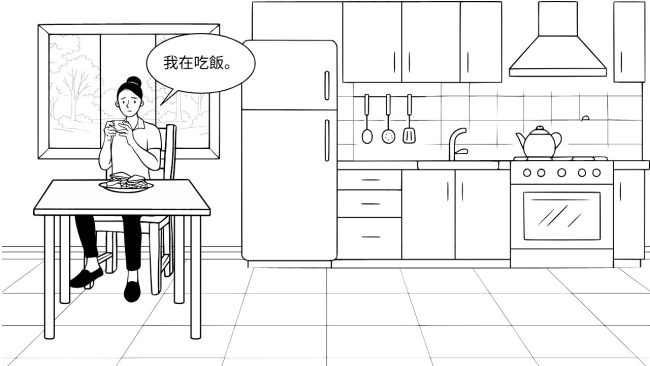
Structure
Basic form
Only verbs indicating actions that are ongoing, dynamic, and have a certain duration can be used with the progressive aspect marker zài 在. Therefore, it cannot be used with verbs such as shì 是 ‘to be’, xǐhuan 喜欢/喜歡 ‘to like’, or an adjective as a predicate such as hǎo 好 ‘good’ or è 饿/餓 ’hungry’.
Zài 在 must precede the verb.
When the adverb zhèng 正 is combined with zài 在 as zhèngzài 正在, it functions as an adverb and must precede the verb. The particle ne 呢 can be added at the end for emphasis.
Note that the full structure zhèngzài … ne 正在 … 呢 can be varied and different parts may be left out. Ne 呢 at the end of the sentence is optional.
Ne 呢 can also be used on its own.
Negation
To negate a sentence with the progressive aspect marker zài 在, méi(yǒu) 没(有)/沒(有) is placed before zài 在. Zhèng 正 and ne 呢 are usually not used in negative sentences, as the emphasis they provide is typically unnecessary in negation.
Sometimes bú (shì) 不(是) is used as negation to emphasize the denial of an incorrect assumption, focusing on correcting the other person’s understanding. This form has a tone that carries an element of clarification or contrast.
Questions
There are two ways to form a yes-no question.
One way is to add the question particle ma 吗/嗎 at the end of the sentence.
Another way to form a yes-no question is by placing shì bu shì 是不是 before zài 在.
To ask about ‘what’ someone is currently doing, use the question word shénme 什么/什麼 ‘what’.
With adverbs
Adverbs, such as dōu 都 ‘both, all’ and hái 还/還 ‘still’ are placed before zài 在.
With prepositional phrases
A prepositional phrase is usually placed between zài 在 and the verb that shows the action.
Functions
1. Zài 在 expressing an action in progress
Zài 在 shows an action is ongoing and often functions similarly to the English present continuous tense (e.g. ‘am eating’ or ‘are talking’). Using zài 在 on its own is the most common pattern in daily conversations.
It is much more common to talk about an action in progress, than one that is not. When you say that an action is not ongoing, this is usually in answer to a question.
Emphasis can be added to the action in progress with zhèng 正 and ne 呢. Zhèng 正 emphasises that the action is happening ‘right now’ or that one is ‘right in the middle’ of doing something. Ne 呢 highlights that the action is ongoing. Note that zhèngzài 正在 makes the tone of the utterance bit more formal than if zài 在 is used alone.
Note that if the sentence contains a location with a prepositional zài 在, such as zài jiā 在家 ‘at home’ you do not use zài 在 twice, so instead of zhèngzài 正在+ zài 在, you only say zhèngzài 正在.
The action in progress can also occur in the past or future. Whether the time of the action in progress is happening in the present, past or future can be indicated by a time phrase or a dependent clause, as in the following two examples. However, often the time is simply understood from the context.