

 en
en cs
cs da
da de
de it
it pl
pl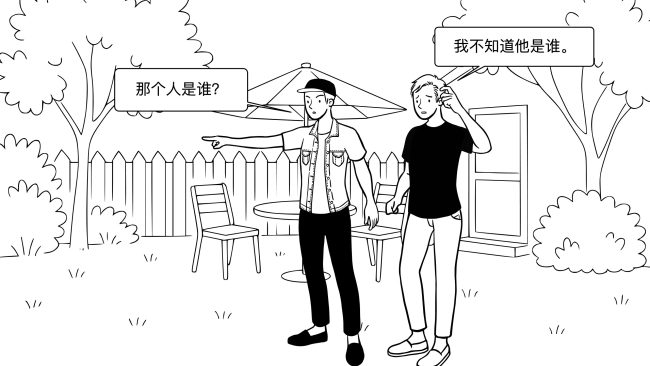
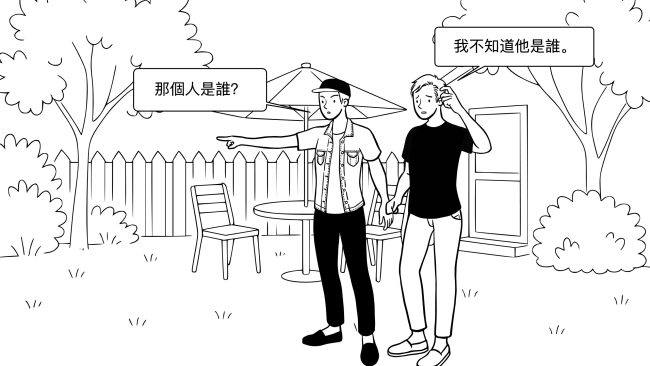
Indirect speech can include an embedded question to report what someone asks, knows, or wonders. For example, in English we can say: He asked me whether Mr. Wang could come or I don’t know who he is.
The most common types of embedded questions in Chinese are:
- Questions with question words, such as shéi 谁/誰 ‘who’, nǎr 哪儿/哪兒 ‘where’, shénme 什么/什麼 ‘what’, jǐ 几 ‘how many’, wèishénme 为什么/為什麼 ‘why’, etc.
- A-not-A questions
- Alternative questions with háishì 还是/還是 ‘or’
Typical verbs that introduce embedded questions include zhīdao 知道 ‘know’, wèn 问/問 ‘ask’, gàosu 告诉/告訴 ‘tell’, or wàng 忘 ‘forget’. When a question is embedded, its word order, including the position of the question word, does not change, and the whole sentence is a statement rather than a question.
Here are some examples:
Structure
Verbs such as wèn 问/問 ‘ask’ and gàosu 告诉/告訴 ‘tell’ generally require an object. When this object is also the subject of the embedded question, the subject of the embedded question can be omitted. However, if the object and the subject of the embedded question are different, both must be retained.
In this sentence, wǒ 我 ‘I’ is the object of wèn 问/問 ‘ask’ and the subject of the embedded question. It is therefore not repeated.
In this sentence, xuéshēng 学生/學生 ‘students’ is the object of gàosu 告诉/告訴 ‘tell’ and the subject of the embedded question. It is therefore not repeated.
In this sentence, the object of wèn (Wáng xiānsheng 王先生) and the subject of the embedded question (tā bàba 他爸爸) are different.
When expressing “whether” or “if” in indirect speech, the A-not-A structure should be used.
Functions
1. Reporting information
The basic function of indirect speech is to report the content of a question in statement form or indicate whether someone knows or mentions information about an event or a situation.
2. Softening Requests
When making requests or inquiries, the indirect speech can be used to make the request sound milder, as if saying: “I would like to ask/know…” or “I wonder…” For example: