
Menu

Question forms in indirect speech

UBER indirect speech sim UBER indirect speech tra

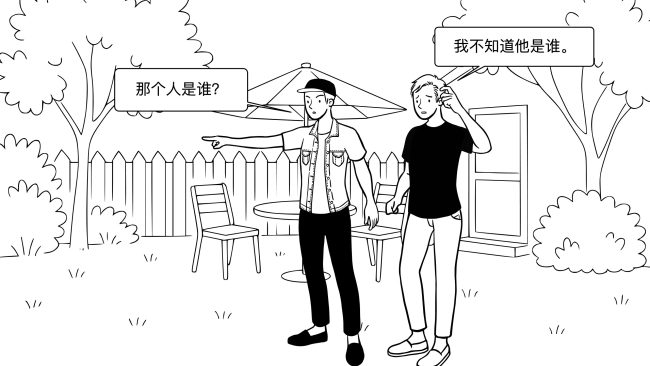
Indirect speech can include an embedded question to report what someone asks, knows, or wonders. For example, in English we can say: He asked me whether Mr. Wang could come or I don’t know who he is.

The most common types of embedded questions in Chinese are:

  1. Questions with question words, such as shéi 谁/誰 ‘who’, nǎr 哪儿/哪兒 ‘where’, shénme 什么/什麼 ‘what’, jǐ 几 ‘how many’, wèishénme 为什么/為什麼 ‘why’, etc.
  2. A-not-A questions
  3. Alternative questions with háishì 还是/還是 ‘or’

Typical verbs that introduce embedded questions include zhīdao 知道 ‘know’, wèn 问/問 ‘ask’, gàosu 告诉/告訴 ‘tell’, or wàng 忘 ‘forget’. When a question is embedded, its word order, including the position of the question word, does not change, and the whole sentence is a statement rather than a question.

Here are some examples:

我不知道他是谁
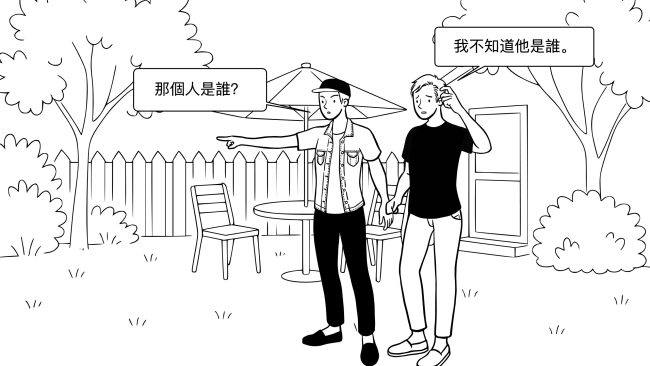
我不知道他是誰
Wǒ bù zhīdào tā shì shéi.
I don’t know who he is.
他问我王先生能不能来
他問我王先生能不能來
Tā wèn wǒ Wáng xiānsheng néng bu néng lái.
He asked me whether Mr. Wang could come.
她忘了我们想喝茶还是喝咖啡
她忘了我們想喝茶還是喝咖啡
Tā wàng le wǒmen xiǎng hē chá háishì hē kāfēi.
She forgot whether we want to drink tea or coffee.

Structure

Subject
Verb
忘了
忘了
wàng le
Embedded question
他是谁。
他是誰。
tā shì shéi.
I forgot who he is.
Subject
Verb
知道
知道
zhīdào
Embedded question
现在几点。
現在幾點。
xiànzài jǐ diǎn.
He knows what time it is now.

Verbs such as wèn 问/問 ‘ask’ and gàosu 告诉/告訴 ‘tell’ generally require an object. When this object is also the subject of the embedded question, the subject of the embedded question can be omitted. However, if the object and the subject of the embedded question are different, both must be retained.

Subject
Verb
wèn
Object
Embedded question
累不累。
累不累。
lèi bu lèi.
He asked me whether I was tired.

In this sentence, wǒ 我 ‘I’ is the object of wèn 问/問 ‘ask’ and the subject of the embedded question. It is therefore not repeated.

Subject
老师
老師
Lǎoshī
Verb
告诉
告訴
gàosu
Object
学生
學生
xuéshēng
Embedded question
什么时候考试。
什麼時候考試。
shénme shíhou kǎoshì.
The teacher told the students when the exam would be.

In this sentence, xuéshēng 学生/學生 ‘students’ is the object of gàosu 告诉/告訴 ‘tell’ and the subject of the embedded question. It is therefore not repeated.

Subject
我们
我們
Wǒmen
Verb
wèn
Object
王先生
王先生
Wáng xiānsheng
Embedded question
他爸爸想不想来。
他爸爸想不想來。
tā bàba xiǎng bu xiǎng lái.
We asked Mr. Wang whether his father wants to come or not.

In this sentence, the object of wèn (Wáng xiānsheng 王先生) and the subject of the embedded question (tā bàba 他爸爸) are different.

When expressing “whether” or “if” in indirect speech, the A-not-A structure should be used.

大家都想知道你喜欢不喜欢这个颜色。
大家都想知道你喜歡不喜歡這個顏色。
Dàjiā dōu xiǎng zhīdào nǐ xǐhuan bù xǐhuan zhè ge yánsè.
Everyone wants to know whether you like this colour.
我不知道他会不会跟我们一起去。
我不知道他會不會跟我們一起去。
Wǒ bù zhīdào tā huì bu huì gēn wǒmen yìqǐ qù.
I don’t know if he will go with us.

Functions

1. Reporting information

The basic function of indirect speech is to report the content of a question in statement form or indicate whether someone knows or mentions information about an event or a situation.

老师问他昨天为什么没来。
老師問他昨天為什麼沒來。
Lǎoshī wèn tā zuótiān wèishénme méi lái.
The teacher asked him why he didn’t come yesterday.
他问我你汉字写得怎么样。
他問我你漢字寫得怎麼樣。
Tā wèn wǒ nǐ Hànzì xiě de zěnmeyàng.
He asked me how well you write Chinese characters.
我告诉同学几点考试。
我告訴同學幾點考試。
Wǒ gàosu tóngxué jǐ diǎn kǎo shì.
I told my classmates what time the exam is.
我们不知道他是不是学生。
我們不知道他是不是學生。
Wǒmen bù zhīdào tā shì bú shì xuésheng.
We don’t know whether he is a student or not.

2. Softening Requests

When making requests or inquiries, the indirect speech can be used to make the request sound milder, as if saying: “I would like to ask/know…” or “I wonder…” For example:

老师,我想问您下午有没有时间。
老師,我想問您下午有沒有時間。
Lǎoshī, wǒ xiǎng wèn nín xiàwǔ yǒu méi yǒu shíjiān.
Teacher, I’d like to ask if you have time this afternoon.
我想知道谁能帮我忙。
我想知道誰能幫我忙。
Wǒ xiǎng zhīdào shéi néng bāng wǒ máng.
I would like to know who can help me.
不知道你想不想一起去吃饭?
不知道你想不想一起去吃飯?
Bù zhīdào nǐ xiǎng bu xiǎng yìqǐ qù chī fàn?
I wonder if you’d like to go eat together.