

 en
en cs
cs da
da de
de it
it pl
plExplanations
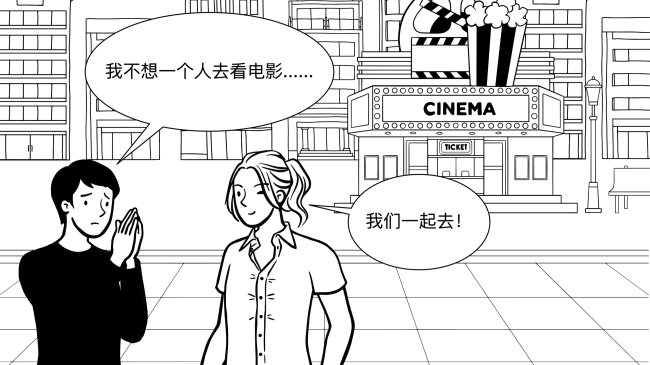
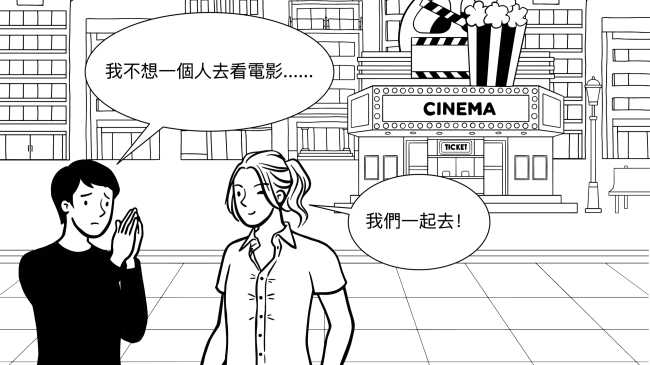
Yíkuài(r) 一块(儿) / 一塊(兒) ‘together’ and yìqǐ 一起 ‘together’ are scope adverbs that express joint action or shared participation. They are often interchangeable. Yìqǐ 一起 is neutral; yíkuài(r) 一块(儿) / 一塊(兒) is a bit more colloquial.
Structure
Basic structure
Yíkuài(r) 一块(儿) / 一塊(兒) and yìqǐ 一起 are placed before the main verb or verb phrase to express doing something together.
With conjunctions hé/gēn 和 / 跟 … ‘and …’
Hé 和 or gēn 跟 can be used to mark the person that the subject does something together with. The phrase hé/gēn 和 / 跟 + person normally comes before yíkuài(r) 一块(儿) / 一塊(兒) or yìqǐ 一起. In this use, hé 和 and gēn 跟 are almost the same. Gēn 跟 is a bit more colloquial and hé 和 is more neutral.
Negation
Sentences with yíkuài(r) 一块(儿) / 一塊(兒) or yìqǐ 一起 are negated with bù 不 or méi 没 (for past events). The negation adverbs bù 不 and méi 没 are placed before yíkuài(r) 一块(儿) / 一塊(兒) or yìqǐ 一起 to express the notion of ‘doing something but not together’.
Questions
Questions are formed with the particle ma 吗 at the end of the sentence.
Natural alternatives for yes–no questions include adding, for example, the expressions yào bú yào 要不要 ‘want or not’, néng bù néng 能不能 ‘can or not’ and shì bú shì 是不是 ‘be or not’ before yíkuài(r)一块(儿) / 一塊(兒) or yìqǐ 一起.
With adverbs
Other scope adverbs such as yě 也 ‘also’ and dōu 都 ‘both; all’ can co-occur with and typically precede yíkuài(r) 一块(儿) / 一塊(兒) or yìqǐ 一起.
The following adverbs also commonly co-occur with yíkuài(r) 一块(儿) / 一塊(兒) or yìqǐ 一起 and also typically appear before yíkuài(r) 一块(儿) / 一塊(兒) or yìqǐ 一起:
- Temporal/frequency: yǐjīng 已经 ‘already’, chángcháng 常常 ‘often’, zǒngshì 总是 ‘always’, yǒu shíhou 有时候 ‘sometimes’, yòu 又 ‘again’, zài 再 ‘again’, yìzhí 一直 ‘continuosly’
- Attitude/possibility: kěnéng 可能 ‘maybe’
- Additive/continuative: hái 还 ‘also; still’
With modal verbs
Modal verbs such as kěyǐ 可以 ‘may, can, be allowed to’ or huì 会 ‘can; know how to’ precede yíkuài(r) 一块(儿) / 一塊(兒) or yìqǐ 一起.
Functions
1. Expressing shared participation
Yíkuài(r) 一块(儿) / 一塊(兒) or yìqǐ 一起 show that the action is done together by two or more people at the same time or in the same place.