

 en
en cs
cs da
da de
de it
it pl
plBù 不 is an adverb which negates actions or states and is the most common word for saying ‘not’ in Chinese. It is mainly used before verbs or adjectives and is used to talk about things people do regularly, things happening now, or things that will happen in the future. For an action that has not occurred or is not completed, the negation adverb méi 没/沒 ‘not’ is used instead of bù 不 ‘not’. The verb yǒu 有 ‘to have; to exist’ is also negated with méi 没/沒 ‘not’.
Note, that bù 不 ‘not’ can be pronounced in two different ways:
bù 不 and bú 不
When bù 不 is used by itself or comes before a syllable in a first, second or third tone, it is pronounced as bù. When it comes before a syllable in a fourth tone, it is pronounced as bú 不.
Also check The negation adverb méi 没/沒 ‘not’
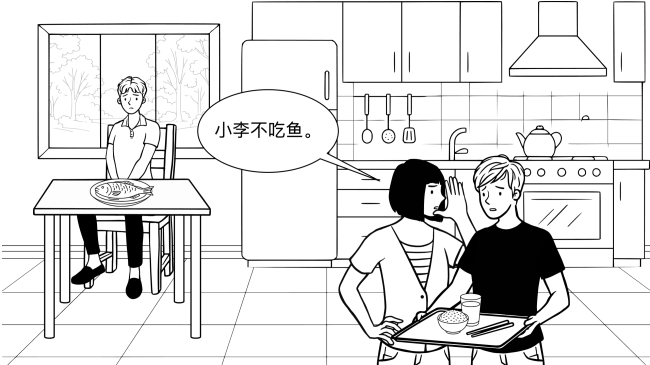
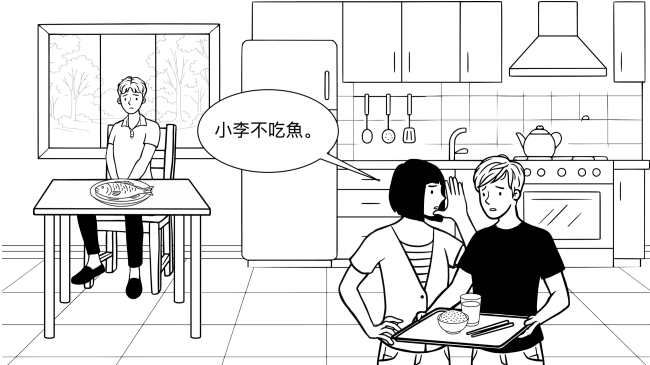
Structure
Basic form
The negation adverb bù 不 ‘not’ is placed before a verb or adjective predicate.
Negating a verb predicate
In a sentence with a modal verb, bù 不 ‘not’ usually precedes the modal verb.
It is also possible to place bù 不 ‘not’ after the modal verb. In this pattern, the modal verb retains its positive meaning (want, can, should) and it is the main action that is negated.
Negating an adjective
Question
There are two ways to form a yes-no question.
One way is to add the question particle ma 吗/嗎 at the end of the sentence. Bù 不 is generally not included in the question unless negation is specifically intended.
In a negative question, bù 不 should be placed before the verb.
Another way to form a yes-no question is by combining the affirmative and negative forms of the verb or adjective.
In the sentences with a modal verb, it is the modal verb that appears in affirmative and negative forms.
With adverbs
Adverbs like yě 也 ‘also’, dōu 都 ‘all, both’, hái 还/還 ‘still’ and cháng 常 ’often’ are mostly placed before bù 不 ‘not’’. Bù 不 ‘not’ negates the verb or adjective that follows it, while the adverb modifies the negated phrase as a whole.
Bù 不 ‘not’ always negates what comes after it and some adverbs can be negated directly by bù 不 ‘not’. As bù 不 ‘not’ negates the adverb, the meaning of the sentence changes. Compare the following sentences
With prepositional phrases
Bù 不 is usually placed before the prepositional phrase.
Bù 不 ‘not’ is sometimes placed directly in front of the verb, only negating the verb. This structure is mainly used to correct assumptions or highlight exceptions, ‘in X situation, I don’t Y’.
If the predicate is an adjective, the sentence will usually negate the state expressed by the adjective. Consequently, bù 不 ‘not’ is usually placed directly before the adjective.
Functions
1. Bù 不 ’not’ Negating Verbs Referring to Permanent States, Actual Situations, Facts, or Habits
Bù 不 negates objective facts or habitual truths in neutral terms. It applies to permanent characteristics, general states, or repeated actions.
2. Bù 不 ’not’ Expressing Refusal, Prohibition or Unwillingness
Bù 不 together with the verb expresses active rejection, prohibition, or personal unwillingness to act. It conveys deliberate choice or command-based negation, often carrying strong emotional weight.
3. Bù 不 ’not’ in Combination with a Modal Verb Expressing Inability or Lack of Permission
Bù 不 in combination with a modal verb specifically addresses what cannot occur due to limitations of skill, circumstance, or authority. Modal verbs that indicate capability or permission are often used in this structure.
4. Using bù 不 ’not’ in answers to Express Denial
Bù 不 ‘not’ is commonly used in short answers to directly deny or contradict a statement. Unlike English, where ‘no’ stands alone, bù 不 is typically paired with the verb or adjective being negated.
Bù 不 sometimes occurs alone at the beginning of a denial, but must be followed by either the negated verb or adjective or a contrastive statement
or