
 en
en cs
cs da
da de
de it
it pl
plThere are various forms that are used to convey approximate numbers or inexact quantities. A common form involves inserting duō 多 ‘more than’ into a “number + measure word (+ noun)” phrase. For example, yí ge duō yuè 一个多月/一個多月 means ‘more than one month but less than two,’ while sānshí duō ge rén 三十多个人/三十多個人 means ‘more than thirty people but fewer than forty.’
Duō 多 can be understood as indicating a fuzzy range between two numbers. For example, yí ge duō yuè 一个多月/一個多月 refers to a period longer than one month but less than two—this could mean one month and two days or one month and twenty-nine days. Similarly, sānshí duō ge rén 三十多个人/三十多個人 could refer to thirty-one, thirty-five, or thirty-nine people.
An approximate value can also be expressed by two adjacent numbers, such as 三四个人/三四個人sān sì ge rén ‘three or four persons’ and 七八十个人/七八十個人 qī bā shí ge rén ‘seventy to eighty persons.’
The following section introduces two types of approximate number expressions: those that include duō 多, and those that use two adjacent numbers to convey an approximate quantity.
Structure
1. Placing the duō 多 after the measure word
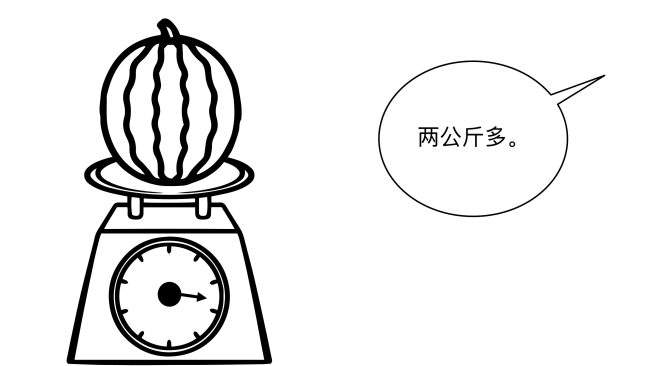
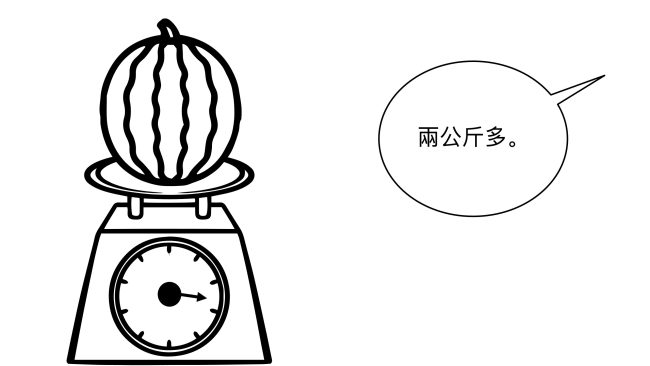
Certain nouns, such as tiān 天 ‘day’ and nián 年 ‘year’, can function as measure words in Chinese. In such cases, duō 多 must be placed after this kind of noun.
Normally, when a numeral phrase contains both a measure word and a noun, duō 多 is still placed after the measure word.
2. Placing duō 多 after the number
Sometimes, when the number includes units like ten (shí 十), hundred (bǎi 百), or thousand (qiān 千), the word duō 多 can be placed after the number to indicate a larger fuzzy number range.
Note that when duō 多 is placed after the measure word, the amount is understood to extend only slightly beyond the stated number, which is less than one full unit. In contrast, when duō 多 is placed directly after the number, it refers to a much broader range. Here are some examples:
| shí kuài duō 十块多/十塊多 | roughly between ¥10 and ¥11 |
| shí duō kuài 十多块/十多塊 | anywhere from ¥10 up to just under ¥20 |
| èrshí gōngjīn duō 二十公斤多 | roughly between 20 and 21 kilos |
| èrshí duō gōngjīn 二十多公斤 | anywhere from between 20 and 30 kilos |
3. Using two adjacent numbers
Two adjacent numbers are often combined and placed before a measure word or “measure word-like noun,” such as tiān 天 and nián 年, to express an approximate quantity. For example, sān sì tiān 三四天 means ‘three or four days.‘ Note that ‘one or two‘ and ‘two or three’ are usually expressed by yì liǎng 一两/一兩 and liǎng sān 两三/兩三 in combinations such as yì liǎng bǎi 一两百/一兩百 ‘one to two hundred’, liǎng sān qiān 两三千/兩三千 ‘two to three thousand’, or yì liǎng wàn 一两万/一兩萬 ‘ten to twenty thousand.’ The only exception is yī èr shí 一二十 ‘ten to twenty.’
It is important to note that in this type of number pairing, jiǔ 九 and shí 十 cannot be combined. The following are some examples of the most frequently used number combinations.
Functions
Indicating a rough or inexact number
These structures are typically used when the exact number is unknown, unnecessary, or intentionally unspecified. Some speakers also use jǐ 几/幾 ‘several, a few’ to indicate approximate quantities, though its usage is more limited. It is generally restricted to appearing after shí 十 ‘ten’ or its multiples, as in shí jǐ 十几/十幾 or èrshí jǐ 二十几/二十幾.