

 en
en cs
cs da
da de
de it
it pl
plThe directional complements can be divided into simple and compound forms. The simple directional complements include lái 来/來 ‘(toward the speaker)’, qù 去 ‘(away from the speaker)’, shàng 上 ‘upward’, xià 下 ‘downward’, jìn 进/進 ‘inward’, chū 出 ‘outward’, huí 回 ‘back’, guò 过/過 ‘over’, qǐ 起/起 ‘up’ and kāi 开/開 ‘away’.
On the other hand, the compound forms, which are usually called compound directional complements, can indicate both the direction of the movement as well as whether it is toward or away from the speaker. Below are the most commonly used ones:
| Simplified character | Traditional character | Pinyin | Meaning |
| 上来 | 上來 | shàng lai | come up (toward the speaker) |
| 上去 | 上去 | shàng qu | go up (away from the speaker) |
| 下来 | 下來 | xià lai | come down (toward the speaker) |
| 下去 | 下去 | xià qu | go down (away from the speaker) |
| 进来 | 進來 | jìn lai | come in (toward the speaker) |
| 进去 | 進去 | jìn qu | go in (away from the speaker) |
| 出来 | 出來 | chū lai | come out (toward the speaker) |
| 出去 | 出去 | chū qu | go out (away from the speaker) |
| 回来 | 回來 | huí lai | come back (toward the speaker) |
| 回去 | 回去 | huí qu | go back (away from the speaker) |
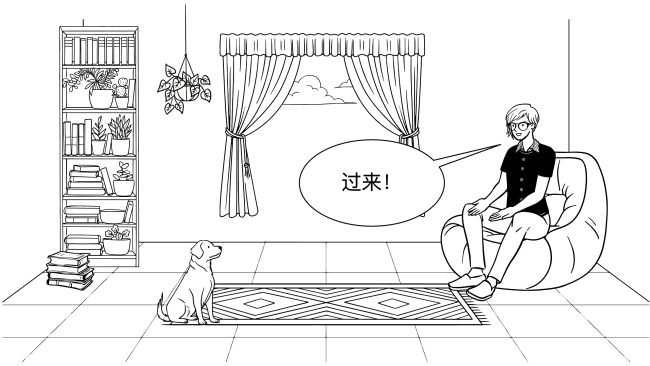
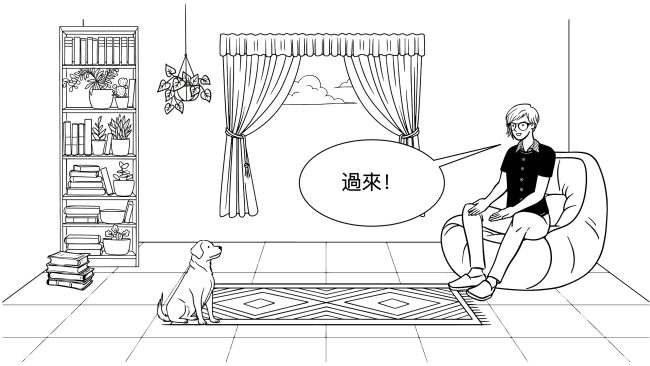
| 过来 | 過來 | guò lai | come over (toward the speaker) |
| 过去 | 過去 | guò qu | go over (away from the speaker) |
| 起来 | 起來 | qǐ lai | get up(toward the speaker) |
Note that the form qǐ qu 起去/起去 does not exist.
Structure
1. Without object
Compound directional complements combine two directional elements, which show both spatial movement and its relation to the speaker’s position. When there is no object, they are placed directly after the verb.
2. With locative object
When there is an object indicating the location, it should be inserted between the two items of the compound directional complement. If the action has been completed, the aspect marker le 了 is placed directly after a directional complement such as shàng 上, xià 下, jìn 进/進, chū 出 and huí 回.
3. With object
Some verbs, such as ná 拿, mǎi 买 and dài 带/帶, usually take a direct object. Normally, the object should also be inserted between the two items of the compound directional complement. If an action has been completed, the aspect marker le 了 is placed directly after a directional complement such as shàng 上, xià 下, jìn 进/進, chū 出 and huí 回.
Note that in this usage, lái 来/來 is used more often than qù 去. Here are some typical examples:
4. Making a request
When making a request, compound directional complements can also be placed as a whole after the object. Below are some typical examples:
5. With aspect marker le 了
The aspect marker le 了 is often used when the action has been completed. In this usage, there are three possible structures, which imply different focuses.
5a. highlighting the movement of object: place the whole compound after the object
5b. highlighting the final position of object is close to or away from the speaker: place lái 来/來 and qù 去 after the object
5c. highlighting the appearance or disappearance of the object due to the movement
Note that in the following construction, the object is typically followed by a numeral phrase.
6. With prepositional phrases
Some prepositions that relate to the direction of movement can be placed before the verb-directional complement structure, such as cóng 从/從 ‘from’ (marking the starting point of an action) or xiàng 向 ‘towards’ (indicating the goal or destination of the action).
Directional complements may also occur with non-directional prepositions, such as gěi 给/給.
7. With following action(s)
A directional complement can be followed by another verb or action. In this construction, the second action is the purpose of the former (“in order to”) or simply follows the former (“and then”).
For more information about the directional complement, also check simple directional complement.