

 en
en cs
cs da
da de
de it
it pl
pl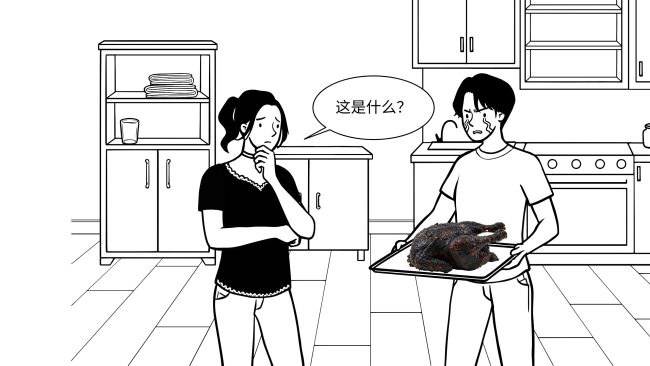
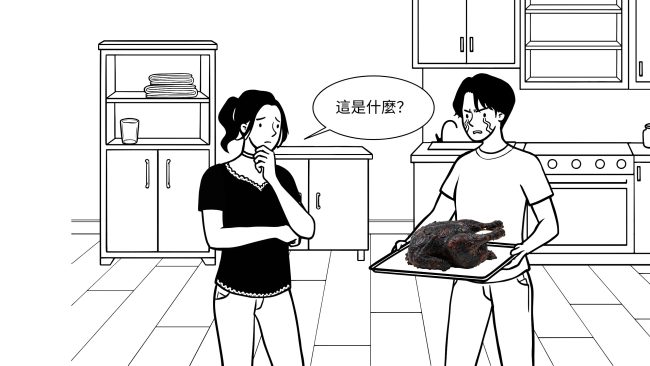
Structure
Questions
The interrogative pronoun shénme 什么/什麼 ‘what’ is often used in questions about things.
It usually occupies the object position.
In this position, it can be preceded by expressions: (yì)diǎnr (一)点儿 / (一)點兒 ’a little’ or (yì)xiē (一)些 ‘a few, some’, which in this usage usually soften the tone of the utterance.
It can also function as a subject, but it is used this way much less frequently and mainly with certain verbs describing relationships (like shì 是 ‘to be’, jiào 叫 ‘to call’, ‘to name’).
It can also function as an attributive modifier. In this role, it stands before the subject or the object, and usually does not combine with the particle de 的.
In some sentences, the interrogative phrase with the pronoun shénme 什么/什麼 ’what’ expresses a relation of possession. In such cases, the question is about the thing the phenomenon indicated by the object is related to. In these sentences, the structural particle de 的 must be used after the pronoun.
The pronoun shénme 什么/什麼 can also be used in yes-no questions with the particle ma 吗/嗎. In such sentences it does not express any question but indefiniteness (‘any’, ‘anything’).
It may appear in the object position.
It can also function as an attributive modifier before the object.
Statements
In affirmative sentences the pronoun shénme 什么/什麼 expresses indefiniteness (‘some’, ‘something’). It usually occurs in the position of object or its attributive modifier.
The pronoun shénme 什么/什麼 can also combine with the adverb dōu 都 ’all’ to form a construction expressing generalization (‘everything’). This construction conveys the idea that the predicate refers to all things within a given range. In this case the pronoun shénme 什么/什麼 can appear in the subject position at the beginning of the sentence.
The pronoun shénme 什么/什麼 can also function as the object, but in this case the shénme dōu 什么都/什麼都 ‘everything’ construction should be placed between the subject and the verb.
Negation
In negative sentences the pronoun shénme 什么/什麼 expresses negative generalization (‘nothing’, ‘none’). It can occupy the object position (after the verb).
It can also function as attributive modifier and occur before the object of the sentence.
The pronoun shénme 什么/什麼 can also be combined with adverbs dōu 都 ‘all’ and bù 不 ‘not’/ méi 没/沒 ‘not’/ méi yǒu 没有/沒有 ‘not’ (shénme dōu bù 什么都不 / 什麼都不 ‘nothing’ or shénme dōu méi 什么都没 / 什麼都沒 ‘nothing’) and used to express emphasis (highlight negative generalization). Used in this way, 什么/什麼 can function as a subject and stand at the beginning of the sentence.
However, most of the time, the pronoun shénme 什么/什麼 functions as an object. Used in this way, it must be placed between the subject and the verb phrase.
The pronoun yě 也 ‘also’ can be used instead of dōu 都 ‘all’.
In negative sentences the pronoun shénme 什么/什麼 can also modify the object which has been moved to the position before the verb phrase. The adverb yě 也 ‘also’or dōu 都 ‘all’ appears after the object.
With modal verbs
The interrogative pronoun shénme 什么/什麼 ‘what’ often occurs in sentences with modal verbs. The modal verbs usually precede the verb they refer to. The position of the pronoun depends on its function as described above.
In negative sentences the negation adverb stands before the modal verb, and the pronoun shénme 什么/什麼 ‘any, anything’ functions as an object or its attributive modifier.
In prepositional phrases
The interrogative pronoun shénme 什么/什麼 ’what’ may appear in prepositional phrases.
Functions
1. Asking about things
Shénme 什么/什麼 ‘what’ in interrogative sentences can be used to ask about things.
2. Asking about properties
When placed before a noun it is used to ask about properties of things (‘what kind of’).
3. Expressing indefiniteness
When used in yes-no questions (with the particle ma 吗/嗎), in affirmative-negative questions or in declarative sentences, it can express indefiniteness (‘anything’, ‘any’, ‘something’, ‘some’).
4. Expressing negative generalization
When used in negative sentences it expresses negative generalization (‘none’, ‘nothing’).
5. Expressing generalization
When used in affirmative sentences with the adverbs dōu 都 ’all’ or yě 也 ‘also’, it expresses generalization (‘everything’).
6. Emphasizing negative generalization
When used in negative sentences with the adverbs dōu 都 ’all’ or yě 也 ‘also’, it expresses strengthened negative generalization (‘nothing’, ‘any’).
7. Expressing surprise or dissatisfaction
When used on its own, it can express surprise or dissatisfaction.
8. Asking about a reason
When used after certain verbs (e.g. kū 哭 ’to cry’, xiào 笑 ‘to laugh’, pà 怕 be afraid, jí 急 ‘to rush’), it can express a question about the reason.
In some context such sentences can be used by the speaker to ask about an unreasonable behavior.
9. Expressing different point of view
When used after certain adjectives (e.g. niánqīng 年轻/年輕 ‘young’, máfan 麻烦/麻煩 ‘troublesome, hǎo 好 ‘good’, dà 大 ‘big’, piàoliang 漂亮 ’beautiful’ etc.) in response to a speaker’s statement, it expresses a position different from the one previously presented.
10. Replacing unlisted items
When used with a particle de 的 at the end of a list of items, it replace the remaining unlisted things (similar to those mentioned in the sentence).
Shénme de 什么的/什麼的 ‘and things like that’ can be used after only one item.
This form is typical of colloquial language.