

 en
en cs
cs da
da de
de it
it pl
plYǒu 有 is a verb expressing possession, meaning ‘somebody has something’, or expressing that there is an entity composed of several parts, similar to the English verb ‘to have’. The subject before yǒu 有 is usually a noun or a personal pronoun. The object following yǒu 有 is typically a noun and often modified by attributes such as a numeral phrase or an adjective, such as yì běn shū 一本书/一本書 (one book) or xīn shū 新书/新書 (new books).
Structure
Basic form
Yǒu 有 is placed between the subject and the object.
Negation
A sentence with yǒu 有 can only be negated by méi 没/没. In a negative sentence, the nominal object is usually not modified by an attributive phrase consisting of a numeral and a measure word unless such information is the focus of the sentence.
Note: yǒu 有 in a negative sentence can be omitted.
Question
There are two ways to form a yes-no question with yǒu 有: using the question particle ma 吗/嗎 or combining the affirmative and negative forms into yǒu méi yǒu 有没有/有沒有. The rule of negation also applies to the question form: the object is not preceded by a ‘numeral-measure word’ attributive unless such information is the focus of the sentence.
To answer this question, yǒu 有 can be used as an affirmative answer, and méi (yǒu) 没/沒(有) as a negative answer. Yǒu 有 and méi (yǒu) 没/沒(有) can be used solely as predicates when giving a short answer.
With an adverb
Like other verbs, when there is an adverb in a sentence with yǒu 有, the adverb should precede yǒu 有.
Functions
1. Yǒu 有 expressing possession
The primary function of the verb yǒu 有 is to express possession: the subject is typically an animate noun referring to the possessor (a person or an animal), and the object is a noun referring to the possessed item.
2. Yǒu 有 expressing the existence of a relationship between people
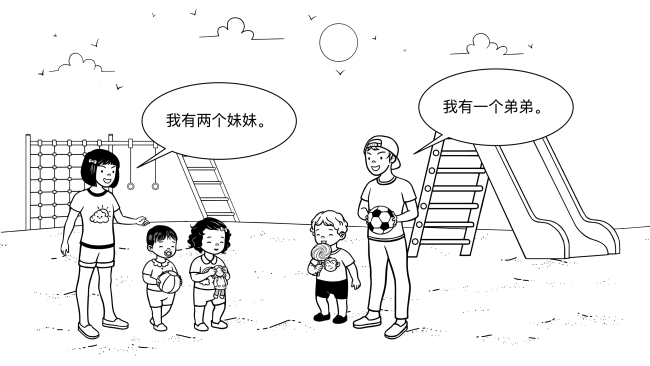
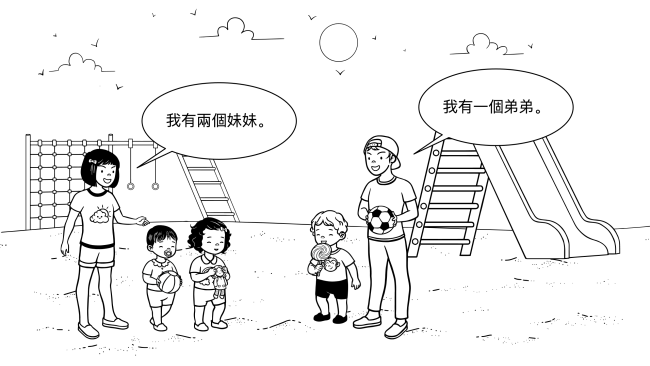
The verb yǒu 有 can also express the existence of a relationship (e.g. friendship, kinship, etc.) between people. In such sentences, both the subject and the object are usually animate nouns referring to people who are connected by that relationship.
2. Yǒu 有 expressing inclusion or containment
The verb yǒu 有 can also be used to inform that the subject contains, includes, or is composed of smaller parts. In this usage, the subject is usually a noun referring to a whole, and the object is a noun or several nouns referring to its components.