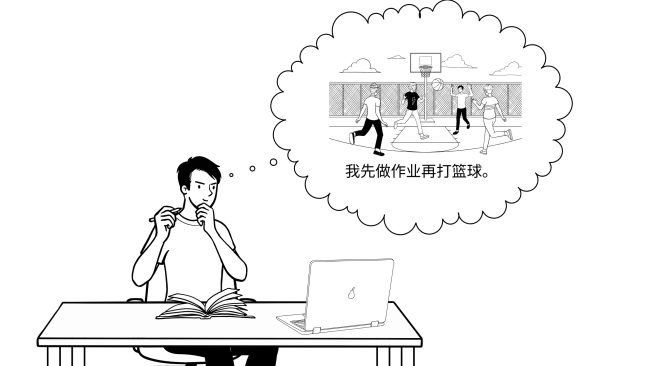
The pattern xiān… zài/ránhòu… 先…… 再/然后/然後…… ‘first… then…’ is used to express a sequence of actions or states in chronological order. The action in the first clause precedes the action or state of the second clause.
Structure
Basic form
The subject is placed before the adverb xiān 先 ‘first’, while a verb or a verb phrase follows xiān 先 ‘first’ and another verb or verb phrase follows zài 再 or ránhòu 然后/然後 ‘then’.
Both zài 再 and ránhòu 然后/然後 indicate that one action or state happens first, and then another one will happen afterwards. Zài 再 indicates that one action or state happens, and then another one will happen afterwards. It is typically used for habitual actions (e.g., daily routine) or for future actions or states that have not taken place yet.
verb/verb phrase 1
做作业
做作業
zuò zuòyè
verb/verb phrase 2
打篮球。
打籃球。
dǎ lánqiú
First I’ll do my homework, then I’ll play basketball.
Ránhòu 然后/然後 can be used for sequences referring to actions already occurred in the past as well.
verb/verb phrase 1
做作业
做作業
zuò zuòyè
verb/verb phrase 2
打篮球。
打籃球。
dǎ lánqiú
First I did the homework, then I played basketball.
With different subjects
The pattern can also be used with two different subjects. The first subject always appears before xiān 先, but the position of the second subject is different: it precedes the adverb zài 再, or follows the conjunction ránhòu 然后/然後.
verb/verb phrase 1
出门,
出門,
chū mén,
verb/verb phrase 2
关门。
關門。
guān mén.
You go out first, then I’ll close the door.
verb/verb phrase 1
出门,
出門,
chū mén,
verb/verb phrase 2
关门。
關門。
guān mén.
You go out first, then I’ll close the door.
Questions
To form a yes–no question, the question particle ma 吗/嗎 can be added at the end of the sentence.
verb/verb phrase 1
去运动
去運動
qù yùndòng
verb/verb phrase 2
洗澡
洗澡
xǐ zǎo
Do you exercise first and then take a shower?
verb/verb phrase 1
吃饭
吃飯
chī fàn
verb/verb phrase 2
去学校
去學校
qù xuéxiào
Do you eat first and then go to school?
With adverbs
When an adverb modifies the entire sequence, it is placed before xiān 先 because it modifies both actions.
verb/verb phrase 1
洗澡
洗澡
xǐ zǎo
verb/verb phrase 2
去睡觉。
去睡覺。
qù shuì jiào.
He often takes a shower first, and then goes to sleep.
When the adverb modifies only one action, it is placed immediately before the verb.
verb/verb phrase 1
走,
走,
zǒu,
verb/verb phrase 2
走快一点。
走快一點。
zǒu kuài yìdiǎn.
Let's walk slowly first, then a little faster.
verb/verb phrase 1
写完作业,,
xiěwán zuòyè
verb/verb phrase 2
检查。
jiǎnchá.
We will first finish our homework, then carefully check it.
verb/verb phrase 1
休息,
xiūxi,
verb/verb phrase 2
学习。
xuéxí.
We will first take a good rest, then study hard.
With modal verbs
If the modal verb modifies both actions, it is placed before xiān 先.
verb/verb phrase 1
洗手,
洗手,
xǐ shǒu,
verb/verb phrase 2
吃饭
吃饭
chī fàn.
The children should wash their hands first, then eat.
If the modal verb modifies only one verb, it appears directly before that verb.
verb/verb phrase 1
做作业,
做作业,
zuò zuòyè,
verb/verb phrase 2
出去玩儿。
出去玩儿。
chūqù wánr.
I’ll do my homework first, then I can go out and play.
With three actions or states
To express three sequential actions or states, the pattern xiān… zài… ránhòu… 先…… 再……然后/然後…… ‘first… then… and then…’ is used for actions that have not yet occurred.
verb/verb phrase 1
吃早饭,
吃早飯,
chī zǎofàn,
verb/verb phrase 2
洗澡,
洗澡,
xǐ zǎo,
verb/verb phrase 3
去学校。
去學校。
qù xuéxiào.
I eat breakfast first, then take a shower, and then go to school.
For actions already occurred, the pattern xiān… yòu… ránhòu… 先…… 又…… 然后/然後…… ‘first… then… and then…’ is used.
verb/verb phrase 1
吃了早饭,
吃了早飯,
chī le zǎofàn,
verb/verb phrase 2
洗了澡,
洗了澡,
xǐ le zǎo,
verb/verb phrase 3
去了学校。
去了學校。
qù le xuéxiào.
I ate breakfast first, then took a shower, and then went to school.
Functions
1. Expressing sequential order of actions or states
In Chinese, two clauses placed next to each other can often be understood as a sequence when the context is clear.
吃了午饭,我们去打球。
吃了午飯,我們去打球。
Chī le wǔfàn, wǒmen qù dǎ qiú.
After lunch, we will go to play ball.
她回家拿了手机,去大学上课了。
她回家拿了手機,去大學上課了。
Tā huí jiā ná le shǒujī, qù dàxué shàng kè le.
She went home to get her phone and then went to the university for class.
However, when the speaker wants to clearly indicate the chronological order of events, especially when the sequence cannot be reversed, the pattern xiān… zài/ránhòu… 先…… 再/然后/然後…… ‘first… then…’ is used.
The pattern with zài 再 indicates that one action or state will occur first, and then another will take place. It can only be used for habitual actions (e.g., daily routine) and for actions or states that have not yet happened but will occur in the future.
妈妈先做午饭,再去休息。
媽媽先做午飯,再去休息。
Māma xiān zuò wǔfàn, zài qù xiūxi.
Mum makes lunch first, and then goes to rest.
他先吃完早饭,再去上课。
他先吃完早飯,再去上課。
Tā xiān chī wán zǎofàn, zài qù shàng kè.
He’ll finish breakfast first, and then go to class.
你先学发音,再学语法。
你先學發音,再學語法。
Nǐ xiān xué fāyīn, zài xué yǔfǎ.
Learn pronunciation first, then learn grammar.
Zài 再 can also appear independently to mean ‘and then’, indicating that one action will follow another. In this case, xiān 先 is omitted.
我们 (先) 做完作业再出去玩儿。
我們 (先) 做完作業再出去玩兒。
Wǒmen (xiān) zuò wán zuòyè zài chūqù wánr.
We’ll go out to play after finishing our homework.
请你 (先) 等一等再走。
請你 (先) 等一等再走。
Qǐng nǐ (xiān) děng yī děng zài zǒu.
Please wait a moment before you go.
你 (先) 洗了手再吃饺子。
你 (先) 洗了手再吃餃子。
Nǐ (xiān) xǐ le shǒu zài chī jiǎozi.
Eat the dumplings after washing your hands.
In contrast, the pattern xiān… ránhòu…先……然后…… can be used to describe habitual actions (e.g., daily routine), actions or states that have not yet happened but will occur in the future, and actions or states that have already occurred.
我每天早上先洗脸,然后吃早饭。
我每天早上先洗臉,然後吃早飯。
Wǒ měitiān zǎoshang xiān xǐ liǎn, ránhòu chī zǎofàn.
I wash my face first thing every morning, and then eat breakfast.
今天上午我很忙,我要先去银行,然后去超市买东西。
今天上午我很忙,我要先去銀行,然後去超市買東西。
Jīntiān shàngwǔ wǒ hěn máng, wǒ yào xiān qù yínháng, ránhòu qù chāoshì mǎi dōngxi.
I’m very busy this morning, I need to go to the bank first, and then go to the supermarket to buy groceries.
如果你不喜欢看电影,明天我们可以先听音乐,然后去饭店吃晚饭。
如果你不喜歡看電影,明天我們可以先聽音樂,然後去飯店吃晚飯。
Rúguǒ nǐ bù xǐhuan kàn diànyǐng, míngtiān wǒmen kěyǐ xiān tīng yīnyuè, ránhòu qù fàndiàn chī wǎnfàn.
If you don’t like watching movies, tomorrow we can listen to music first and then go to a restaurant for dinner.
我昨天先去了大学的办公室,然后去了书店买书。
我昨天先去了大學的辦公室,然後去了書店買書。
Wǒ zuótiān xiān qù le dàxué de bàngōngshì, ránhòu qù le shūdiàn mǎi shū.
Yesterday I went to the university office first, and then to the bookstore to buy books.
Sometimes, ránhòu 然后/然後 and zài 再 can appear in the same sentence when referring to actions or states that have not yet occurred. Ránhòu 然后/然後 links the steps, and zài 再 highlights the later step as ‘only after that.’
我们先看本子、笔,然后再看看别的。
我們先看本子、筆,然後再看看別的。
Wǒmen xiān kàn běnzǐ, bǐ, ránhòu zài kàn kàn bié de.
Let’s look at the notebooks and pens first, and then we’ll look at the other things.
你太累了,你先休息一下、喝点儿水,然后再爬。
你太累了,你先休息一下、喝點兒水,然後再爬。
Nǐ tài lèi le, nǐ xiān xiūxi yíxià, hē diǎnr shuǐ, ránhòu zài pá.
You’re too tired. Take a rest, drink some water, and then continue climbing.
To express the order of three actions or states that have not yet occurred, the pattern xiān… zài… ránhòu… 先…… 再……然后/然後…… ‘first… then… and then…’ is used. If the actions or states have already occurred, zài 再 is replaced by yòu 又 in the pattern.
这次旅行我们打算先去北京,再去上海,然后去台北。
這次旅行我們打算先去北京,再去上海,然後去台北。
Zhè cì lǚxíng wǒmen dǎsuàn xiān qù Běijīng, zài qù Shànghǎi, ránhòu qù Táiběi.
For this trip, we plan to go to Beijing first, then Shanghai, and then Taipei.
这次旅行我们先去了北京,又去了上海,然后去了台北。
這次旅行我們先去了北京,又去了上海,然後去了台北。
Zhè cì lǚxíng wǒmen xiān qù le Běijīng, yòu qù le Shànghǎi, ránhòu qù le Táiběi.
On this trip, we first went to Beijing, then Shanghai, and then Taipei.


 en
en cs
cs da
da de
de it
it pl
pl