

 en
en cs
cs da
da de
de it
it pl
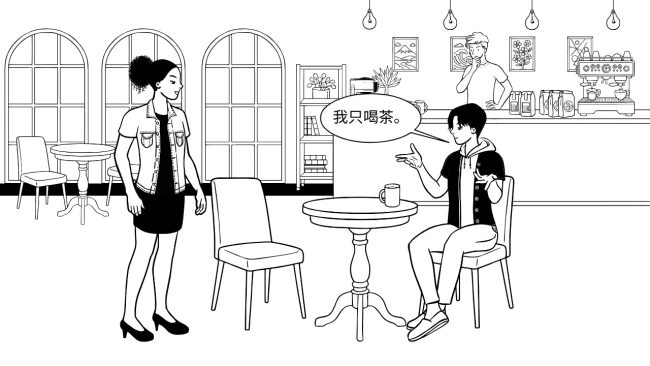
plZhǐ 只 expresses restriction or limitation. Dependent on context, it translates as ‘just’, ‘only’ or ‘merely’.
Structure
Basic form
Zhǐ 只 ’just; only’ is usually placed after the subject and before the main verb in a sentence.
If the sentence contains a modal verb zhǐ 只 ’just; only’ comes before this, when limiting the entire action.
Zhǐ 只 ’just; only’ comes after the modal verb to emphasize limiting the action itself. This is especially common with modal verbs like xiǎng 想 ’would like to; want to’ and néng 能 ‘can’.
Negation
Zhǐ 只 ’just; only’ is used in different negation patterns depending on what you want to negate.
Zhǐ 只 ’just; only’ and the negation adverbs bù 不 or méi 没/沒 are often used to create contrast or emphasis, expressing ‘only A, not B’.
If zhǐ 只 ’just; only’ is placed before the negation adverb, it limits the negation. This pattern emphasizes what is excluded.
If zhǐ 只 ’just; only’ is placed after the negation adverbs, it introduces additional information.
Questions
The most common way to form a yes-no question is to add the question particle ma 吗/嗎 at the end of the sentence. Note, zhǐ 只 only appears in a question when the restrictive meaning of ‘only’ or ‘just’ is intended.
With adverbs
Zhǐ 只 ’just; only’ usually follows adverbs such as chángcháng 常常’often’, yě 也 ‘also’ or hái 还/還 ‘still’.
With prepositional phrases
Zhǐ 只 ’just; only’ is usually placed before the prepositional phrase.
It is possible to place zhǐ 只 ’just; only’ after the prepositional phrase, but it changes the meaning of the sentence.
Functions
Zhǐ 只 ‘only; just’ expresses exclusivity, that something applies to a limited number or a limited quantity of something. It limits the element or elements that comes after it. Below you can see some of its main functions.
1. Zhǐ 只 expressing limitation of an action or situation
Zhǐ 只 ’only; just’ precedes the verb to indicate a limitation in an action or situation. This is the most common use of zhǐ 只 ’only; just’.
2. Zhǐ 只 expressing limitation of quantity
Zhǐ 只 ’only; just’ can also indicate limitation of a quantity.
In English ‘only’ and ‘just’ can appear directly before a person or a thing. Although this is also possible in Chinese, a verb like yǒu 有 ‘there is’ usually follows zhǐ 只’only; just’.
3. Zhǐ 只 expressing limitation in time or place
When zhǐ 只 ’only; just’ is placed before a prepositional phrase, it can indicate a limitation in place or time.
In all functions, the limitation indicated by zhǐ 只 ’just; only’ is often contrast with ‘not’.