The adverb cái 才 is often used to express a temporal sequence between two events, indicating that one action occurs or is performed ‘only after’ the completion of a first action. It is also used to show the speaker’s expectation mismatch, indicating that a time, number, or amount is less or more than expected, depending on where cái 才 is placed.
Structure
Basic form
A succession of two events
When the adverb cái 才 expresses that the second event happens ‘only after’ the first is completed, it is generally preceded by a completed action, often expressed by the structure ‘verb + aspectual particle le 了 + object’ or result complements, but never as a bare verb. Then, cái 才 is followed by a second action, which may be either a bare verb or a verb phrase.
verb/verb phrase
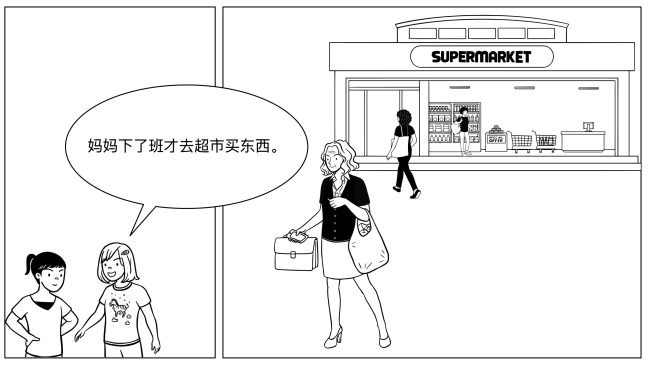
去超市买东西。
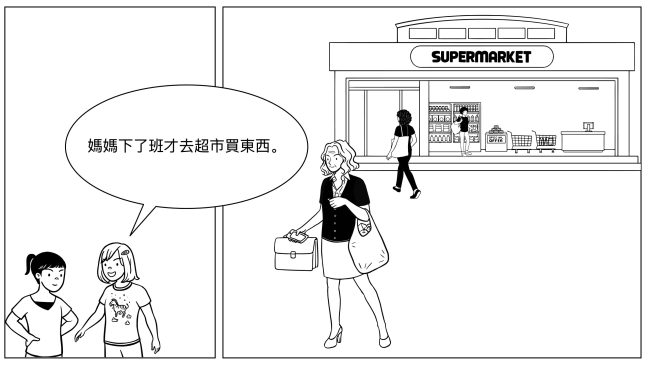
去超市買東西。
qù chāoshì mǎi dōngxi.
Mum goes (went) to the supermarket to buy things only after she gets (got) off work. / She doesn’t (didn’t) go to the supermarket until after work.
verb/verb phrase
去公园玩儿。
去公園玩兒。
qù gōngyuán wánr.
The children go (went) to the park to play only after finishing their homework. / The children don’t (didn’t) go to the park until they finish (finished) their homework.
An expectation mismatch
The adverb cái 才 is used to show that the actual result is different from what the speaker expects. Its meaning depends on whether the value (e.g., duration, quantity, time, age, distance, etc.) appears before or after cái 才 in the sentence.
A. Value before cái 才
When a number or time expression appears before cái 才, it shows that the value is greater, later, or requires more effort than expected.
value
三十八岁
三十八歲
sānshíbā suì
verb phrase
生了一个儿子。
生了一個兒子。
shēng le yí gè érzi.
She didn’t have a child until she was thirty-eight. / My older sister had a son only when she was thirty-eight.
(The age is older than expected.)
verb phrase
通过考试。
通過考試。
tōngguò kǎoshì.
I only passed the exam on the fourth try. / It took me four tries to pass the exam.
(The duration is longer and the process harder than expected.)
value
一百块钱
一百塊錢
yībǎi kuài qián
verb phrase
买了一本书。
買了一本書。
mǎi le yì běn shū.
With 100 yuan, she bought only one book. / It took 100 yuan to buy just one book.
(The quantity of money is more than expected, so the book is expensive.)
value
晚上十一点
晚上十一點
wǎnshàng shíyī diǎn
verb phrase
下班。
下班。
xià bān.
I didn’t get off work until 11 p.m.
(The time is later than expected.)
B. Value after cái 才
When a number or time expression appears after cái 才, it shows that the value is smaller, earlier or requires less efforts than expected.
value
一百块钱。
一百塊錢。
yì bǎi kuài qián.
He only spent 100 yuan.
(The quantity is less than expected.)
(verb phrase)
起床的时候
起床的時候
qǐ chuáng de shíhòu
time reference
早上五点!
早上五點!
zǎoshang wǔ diǎn!
When my younger brother got up, it was only 5 a.m.!
(The time is earlier than expected.)
Functions
1. Cái 才 ‘only after’, ‘not until’ expressing a succession of two events
Cái 才 can indicate that two events happen in succession, implying that one action occurs or is performed ‘only after’ the completion of a first action.
我写完功课才出去玩。
我寫完功課才出去玩。
Wǒ xiě wán gōngkè cái chūqù wán.
I will go out to play only after I finish my homework.
妹妹见到妈妈才不哭了。
妹妹見到媽媽才不哭了。
Mèimei jiàn dào māma cái bù kū le.
My sister stopped crying only when she saw her mother.
她看完这本书才买新的一本。
她看完這本書才買新的一本。
Tā kàn wán zhè běn shū cái mǎi xīn de yì běn.
She buys/will buy a new book only after finishing this one.
孩子长大了以后才能懂这些重要的事情。
孩子長大了以後才能懂這些重要的事情。
Háizi zhǎngdà le yǐhòu cái néng dǒng zhè xiē zhòngyào de shìqíng.
Children can understand these important things only once they have grown up.
Since cái 才 often conveys that something happened later than it should have, it can appear in declarative or interrogative sentences with a tone of complaint or dissatisfaction.
你怎么吃了饭才来?
你怎麼吃了飯才來?
Nǐ zěnme chī le fàn cái lái?
Why did you come only after eating?
你上了火车才给我打电话。
你上了火車才給我打電話。
Nǐ shàng le huǒchē cái gěi wǒ dǎ diànhuà.
You called me only after getting on the train.
我在门口等了十五分钟,他洗完澡才来开门。
我在門口等了十五分鐘,他洗完澡才來開門。
Wǒ zài ménkǒu děng le shíwǔ fēnzhōng, tā xǐ wán zǎo cái lái kāi mén.
I waited at the door for fifteen minutes. He came to open it only after finishing his shower.
2. Cái 才 expressing an expectation mismatch
Cái 才 can also convey the speaker’s subjective judgment, feeling or attitude that a certain value, such as age, duration, or quantity, is different from what the speaker has expected earlier. The position of cái 才 before or after the value would influence the meaning of the sentence.
A. Later/slower/ larger/harder/more expensive than expected
When the value appears before cái 才, it indicates that the speaker considers, for example, an age to be older, a duration to be longer, a quantity as larger, or the timing of an action as later than expected.
她二十五岁才开始学跳舞。
她二十五歲才開始學跳舞。
Tā èrshíwǔ suì cái kāishǐ xué tiào wǔ.
She only started learning to dance at the age of twenty-five.
(The age is older than expected.)
他十分钟才开门。
他十分鐘才開門。
Tā shí fēnzhōng cái kāi mén.
He didn’t open the door until ten minutes later. / It took him ten minutes before he opened the door.
(The duration is longer or slower than expected.)
他三个小时才做完作业。
他三個小時才做完作業。
Tā sān gè xiǎoshí cái zuò wán zuòyè.
He finished his homework only after three hours.
(The duration is longer than expected, suggesting difficulty.)
他们三个人才把桌子搬起来。
他們三個人才把桌子搬起來。
Tāmen sān gè rén cái bǎ zhuōzi bān qǐlái.
It took the three of them to move the table.
(The quantity is larger than expected.)
今天我一直忙着工作,晚上十点半才吃晚饭。
今天我一直忙著工作,晚上十點半才吃晚飯。
Jīntiān wǒ yīzhí máng zhe gōngzuò, wǎnshang shí diǎn bàn cái chī wǎnfàn.
Today I was busy working all day, and I didn’t have dinner until 10:30 p.m.
(The time is later than expected.)
B. Earlier/faster/smaller/easier/cheaper than expected
When the value appears after cái 才, it indicates that the speaker considers, for example, an age to be younger, a duration to be shorter, a quantity as smaller, or the timing of an action as earlier than expected.
他今天才花了十五块钱。
他今天才花了十五塊錢。
Tā jīntiān cái huā le shíwǔ kuài qián.
He spent only 15 yuan today.
(The amount of money is smaller than expected.)
读这本小说,他才花了一个星期。
讀這本小說,他才花了一個星期。
Dú zhè běn xiǎoshuō, tā cái huā le yí gè xīngqī.
He spent only one week reading this novel.
(The amount of time is smaller than expected.)
虽然他昨天很累,但是他今天起床才六点。
雖然他昨天很累,但是他今天起床才六點。
Suīrán tā zuótiān hěn lèi, dànshì tā jīntiān qǐ chuáng cái liù diǎn.
Although he was very tired yesterday, he got up already at six today.
(The time is earlier than expected.)


 en
en cs
cs da
da de
de it
it pl
pl