

过/過
guo
aspectual particle

HSK2

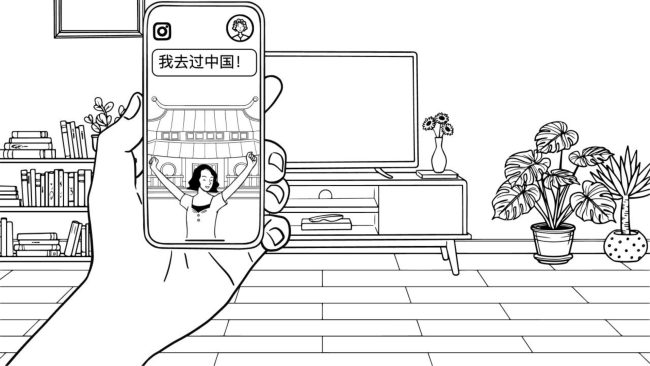
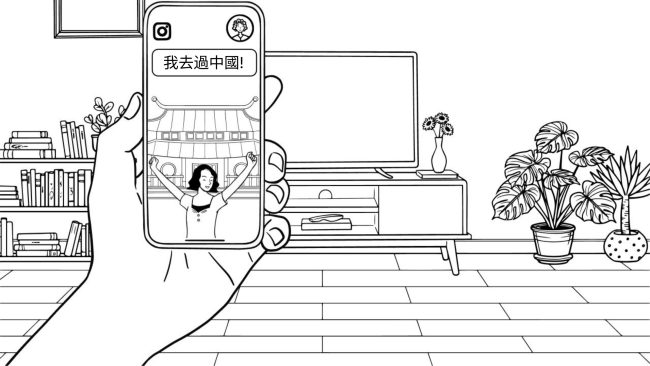
Guo 过/過 is an aspectual particle that always follows the verb in a sentence, and it is used to indicate that an action has been experienced at least once in the past.
Aspectual particle 过

Structure

Basic form

Guo 过/過 always follows the verb in a sentence.

subject
verb
xué
过/過
guo
(object)
中文。
中文。
Zhōngwén.
I have studied Chinese.

In sentences with separable verbs, guo 过/過 is placed directly after the verb and before the object. Separable verbs are a specific group of disyllabic verbs where the two elements can be split because the first element is typically a verb indicating an action, while the second one is often a noun representing the object of that action. Examples of such verbs include chī fàn 吃饭/吃飯 ‘to eat’, jiàn miàn 见面/見面 ‘to meet’ or shuì jiào 睡觉/睡覺 ‘to sleep.

subject
我们
我們
Wǒmen
verb
jiàn
过/過
guo
(object)
面。
面。
miàn.
We have met.

Negation

Since guo 过/過 indicates events that have been experienced in the past, sentences with guo 过/過 are negated using méi 没/沒. For added emphasis, méi yǒu 没有/沒有 can also be used in place of méi 没/沒.

subject
没 (有)/沒(有)
没有
沒有
méi yǒu
verb
xué
过/過
guo
(object)
中文。
中文。
Zhōngwén.
I have never studied Chinese.

Question

There are three common ways to form a question with guo 过/過 to ask if someone has experienced something before:

  1. adding méi yǒu 没有/沒有 at the end of the sentence;
  2. reduplicating the verb and adding méi 没/沒 between them;
  3. adding the question particle ma 吗/嗎 at the end of the sentence.

In all these three types of interrogative sentences, the aspectual particle guo 过/過 is placed after the verb.

subject
verb
xué
过/過
guo
(object)
中文
中文
Zhōngwén
没有/沒有
没有?
沒有?
méi yǒu?
Have you ever studied Chinese?
subject
verb
xué
(过) / (過)
(过)
(過)
guo
méi
verb
xué
过/過
guo
(object)
中文?
中文?
Zhōngwén?
Have you ever studied Chinese?
subject
verb
xué
过/過
guo
(object)
中文
中文
Zhōngwén
吗/嗎
吗?
嗎?
ma?
Have you ever studied Chinese?

All three types of interrogative sentences mentioned above can be answered affirmatively by using the ‘verb + guo 过/過’ phrase alone, and they can be answered negatively by using the ‘méi yǒu 没(有)/沒(有) + verb + guo 过/過’ phrase.

A: 你学过中文没有?/ 你学过中文吗?/ 你学没学过中文?
A: 你學過中文沒有?/ 你學過中文嗎?/ 你學沒學過中文?
Nǐ xué guo Zhōngwén méi yǒu?/ Nǐ xué guo Zhōngwén ma?/ Nǐ xué méi xué guo Zhōngwén?
Have you ever studied Chinese?
B: (我)学过。
B: (我)學過。
(Wǒ) xué guo.
I have.
C: (我)没学过。
C: (我)沒學過。
(Wǒ) méi xué guo.
I haven't.

With adverbs

The adverbs, such as 也 ‘too’ and hái 还/還 ‘in addition’, are placed before the verb followed by guo 过/過.

subject
verb
过/過
guo
(object)
中国。
中國。
Zhōngguó.
He has been to China too.
subject
还/還
hái
verb
过/過
guo
(object)
美国。
美國。
Měiguó.
He has also been to America.

The adverbs cónglái 从来/從來 ‘never’ and hái 还/還 ‘yet’ are frequently paired with guo 过/過 and they are placed before méi(yǒu) 没(有)/沒(有).

subject
从来/從來
从来
從來
cónglái
没(有)/沒(有)
méi
verb
过/過
guo
(object)
中国。
中國。
Zhōngguó.
She has never been to China.
subject
还/還
hái
没(有)/沒(有)
méi
verb
kàn
过/過
guo
(modifier + object)
那本书。
那本書。
nà běn shū.
He has not read that book yet.

With complements

If the action has been experienced, guo 过/過 is placed after the verb and before time-measure complements indicating the duration of the action or before quantitative complements indicating the number of times the action takes place.

subject
verb
xué
过/過
guo
time-measure complement
三年(的)
三年(的)
sān nián (de)
(object)
中文。
中文。
Zhōngwén.
I have studied Chinese for three years.
subject
verb
kàn
过/過
guo
quantitative complement
两遍
兩遍
liǎng biàn
(modifier + object)
那本书。
那本書。
nà běn shū.
She has read that book twice.

Note that the quantitative complement usually precedes the object, but if the object is a place noun, it can also follow the object.

subject
他们
他們
Tāmen
verb
过/過
guo
quantitative complement
一次
一次
yí cì
place
中国。
中國。
Zhōngguó.
They have been to China once.
subject
他们
他們
Tāmen
verb
过/過
guo
place
中国
中國
Zhōngguó
quantitative complement
一次。
一次。
yí cì.
They have been to China once.
For further information about the position of an object in sentences with quantitative complements and time-measure complements, also check Quantitative complement and Time-measure complement.

In serial verb construction

Serial verb constructions typically consist of a sentence with two or more verbs or verbal constructions that share the same subject. These constructions can express reason, purpose, sequential actions or manner of performing an action. In serial verb constructions, guo 过/過 follows only one verb whose experience is the focus of the statement.

subject
verb 1
(object)
外国
外國
wàiguó
verb 2
kàn
过/過
guo
(object)
朋友。
朋友。
péngyou.
I have been abroad to visit friends.
(The focus is on the experience of visiting friends, the fact that this happened in a foreign country is a background information.)
subject
verb 1
过/過
guo
(object)
外国
外國
wàiguó
verb 2
kàn
(object)
朋友。
朋友。
péngyou.
I have been abroad to visit friends.
(The focus is on the experience of having been to a foreign country, the purpose of the trip, which was to visit friends, is an additional information.)

Functions

1. Guo 过/過 expressing past experience

Guo 过/過 often occurs in sentences that convey the idea of having experienced an action at least once in the past, similar to answering the question “Have you ever…?”.

我以前吃过饺子。
我以前吃过饺子。
Wǒ yǐqián chī guo jiǎozi.
I have eaten dumplings before.
我姐姐从来没见过他。
我姐姐從來沒見過他。
Wǒ jiějie cónglái méi jiàn guo tā.

The action may have occurred once or more times, but it cannot be a regular or habitual activity.

我早上喝两杯咖啡。
我早上喝两杯咖啡。
Wǒ zǎoshang hē liǎng bēi kāfēi.
I (usually) drink two cups of coffee in the morning.
(This is a habitual action, meaning the speaker regularly drinks two cups of coffee every morning, so guo 过/過 is not used.)
我以前早上喝两杯咖啡。
我以前早上喝两杯咖啡。
Wǒ yǐqián zǎoshang hē liǎng bēi kāfēi.
I used to drink two cups of coffee in the morning.
(This is a past routine, and even though it is no longer happening, the sentence still describes a habitual action rather than a single completed event, so guo 过/過 is not used.)
我早上喝过这种咖啡。
我早上喝過這種咖啡。
Wǒ zǎoshang hē guo zhè zhǒng kāfēi.
I've drunk this type of coffee in the morning.
(Guo 过/過 indicates that the speaker has had the experience of drinking this type of coffee in the morning. The focus is on the experience rather than a specific completed event.)

The past experience may also refer to a specific time.

我年轻的时候看过不少书。
我年輕的時候看過不少書。
Wǒ niánqīng de shíhou kàn guo bù shǎo shū.
I read a lot of books when I was young.
我两年前来过这儿。
我兩年前來過這兒。
Wǒ liǎng nián qián lái guo zhèr.
I came here two years ago.

Sentences with guo 过/過 are often used to explain a truth or to support a viewpoint.

A: 她的新歌很好听,快听听吧!
A: 她的新歌很好聽,快聽聽吧!
Tā de xīn gē hěn hǎotīng, kuài tīngting ba!
Her new song is really good, listen to it!
B: 你怎么知道?
B: 你怎麼知道?
Nǐ zěnme zhīdào?
How do you know?
A: 我刚听过,当然知道。
A: 我剛聽過,當然知道。
Wǒ gāng tīng guo, dāngrán zhīdào.v
I have just heard it, of course I know.

Note that guo 过/過 is typically used with verbs describing actions that can be repeated and it does not follow verbs whose actions are inherently not repeatable. For example, guo 过/過 does not follow verbs like chūshēng 出生 ‘to be born’ and 死 ‘to die’ as they are events that occur only once in a person’s life.

However, this also applies to events like bì yè 毕业/畢業 ‘to graduate’ or jié hūn 结婚/結婚 ‘to marry’, which are culturally viewed as once-in-a-lifetime events, but can be used with guo 过/過 in limited contexts and in negative sentences.

他在美国毕过业。
他在美國畢過業。
Tā zài Měiguó bì guo yè.
He graduated in the United States.
(This sentence could be used to emphasize that he has had the experience of getting graduated in the USA.)
她没结过婚。
她沒結過婚。
Tā méi jié guo hūn.
She has not got married.
(This sentence could be used to refute a claim that she has been married before, emphasizing that she has never had the experience of getting married. If the speaker simply wants to state that she did not get married, the aspectual particle guo 过/過 is omitted.)

Additionally, guo 过/過 cannot be used with verbs that refer to mental states like zhīdào 知道 ‘to know’, rènshi 认识/認識 ‘to know’, jìde 记得/記得 ‘to remember’ or xīwàng 希望 ‘to hope’. Only the verbs jiào 叫 ‘to call’ and xìng 姓 ‘to be surnamed’ can be followed by guo 过/過.

小马以前姓过张。
小馬以前姓過張。
Xiǎomǎ yǐqián xìng guo Zhāng.
Xiao Ma used to have the last name Zhang before.

Finally, guo 过/過 can also follow some adjectives when serving as predicates to indicate a state that has existed before.

我爸爸、妈妈那时候也是这样,谁没年轻过?
我爸爸、媽媽那時候也是這樣,誰沒年輕過?
Wǒ bàba, māma nà shíhou yě shì zhèyàng, shéi méi niánqīng guo?
My parents were also like that at the time. Who hasn't been young?
树叶绿过,现在又黄了。
樹葉綠過,現在又黃了。
Shùyè lǜ guo, xiànzài yòu huáng le.
The leaves were green once, and now they are yellow again.
Also check Comparison: aspectual particles guo 过/ and le 了1