Structure
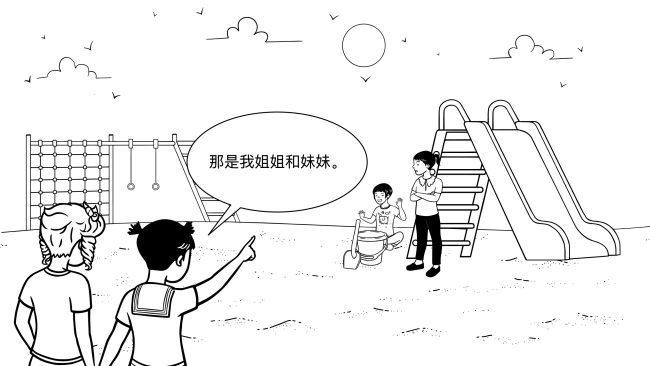
The conjunction hé 和 can connect two nouns, in which case it is placed between them.
Older sister and younger sister
It can also connect two noun phrases.
noun phrase
我的书
我的書
Wǒ de shū
noun phrase
我的笔
我的筆
wǒ de bǐ
My book and my pen
When there are more than two nouns or noun phrases, the conjunction is used between the last two. Other nouns or noun phrases are separated by an enumerative comma ‘、’ (not to be confused with standard comma ‘,’).
Monday, Tuesday and Wednesday
Functions
1. Hé 和 expressing ‘and’
It is used when listing two or more nouns or noun phrases. Note that you should not use it to join other items or sentences.
玛丽和马克是大学生。
瑪麗和馬克是大學生。
Mǎlì hé Mǎkè shì dàxuéshēng.
Mary and Mike are students.
星期一、星期三和星期五我们有汉语口语课。
星期一、星期三和星期五我們有漢語口說課。
Xīngqīyī、xīngqīsān hé xīngqīwǔ wǒmen yǒu Hànyǔ kǒuyǔ kè.
We have Chinese conversation classes on Mondays, Wednesdays and Fridays.
我朋友王力和他弟弟都不在家。
我朋友王力和他弟弟都不在家。
Wǒ péngyou Wáng Lì hé tā dìdi dōu bú zài jiā.
My friend Wang Li and his younger brother aren’t home.
A noun phrase with hé 和 can also be used as an object.
她会说英语、法语和汉语。
她會說英語、法語和漢語。
Tā huì shuō Yīngyǔ, Fǎyǔ hé Hànyǔ.
She can speak English, French and Chinese.
Conjunction hé 和 can also link verbs or adjectives when they are used as subject or object of a sentence. Compare the examples below:
学习和工作都很重要。
學習和工作都很重要。
Xuéxí hé gōngzuò dōu hěn zhòngyào.
Studying and working are both important.
跑步和游泳都对身体好。
跑步和游泳都對身體好。
Pǎo bù hé yóuyǒng dōu duì shēntǐ hǎo.
Running and swimming are good for health.
漂亮和聪明哪个更重要?
漂亮和聰明哪個更重要?
Piàoliang hé cōngming nǎ ge gèng zhòngyào?
Beauty or intelligence, which one is more important?
老师喜欢这个孩子的聪明和努力。
老師喜歡這個孩子的聰明和努力。
Lǎoshī xǐhuan zhège háizi de cōngming hé nǔlì.
The teacher likes the child’s intelligence and diligence.
Take note that some words that usually function as verbs and adjectives, for example xuéxí 学习/學習 ‘to study’ and piàoliang 漂亮 ‘beautiful’ in the examples above function like nouns – here they mean ‘studying’ and ‘beauty’ respectively. Only in such cases can they be linked by the conjunction hé 和.
For ways to link adjectives and verbs, check:


 en
en cs
cs da
da de
de it
it pl
pl