The shì … de 是……的 structure is used in Chinese to highlight or explain specific details about an event, most commonly a past event that is already known to have happened. It allows the speaker to emphasise information such as when, where, how, or with whom the action took place.
This structure is very common in Chinese, but it does not have a direct equivalent in English. A useful way to understand its function is by comparing it to the English ‘it was… that…’, for example: “It was yesterday that I arrived.” This kind of sentence does not simply state that the action happened, it highlights a specific detail, in this case, when it happened.
Structure
Basic form
The shì … de 是……的 structure is used to emphasise specific details about a past action. Here you can see some of the most common structures where shì … de 是……的 is used to place focus on:
• Time (when)
• Place (where)
• Manner (how)
Shì 是 is placed before the part you want to emphasise, while de 的 is usually placed at the end of the sentence or clause.
They arrived yesterday.
(Highlighted meaning: It was yesterday that they arrived. Here the shì … de 是……的 structure highlights when the action took place.)
We met at school.
(Highlighted meaning: It was at school that we met. Here the shì … de 是……的 structure highlights where the action took place.)
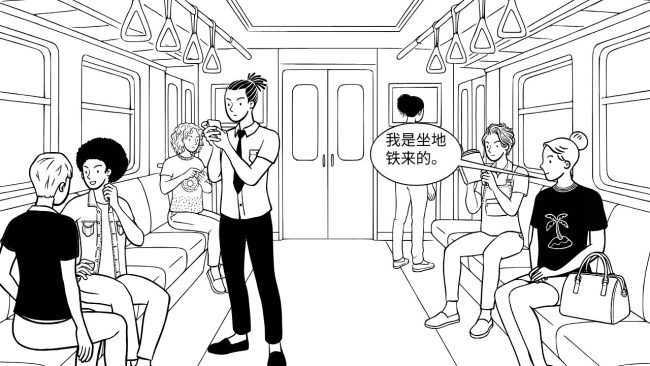
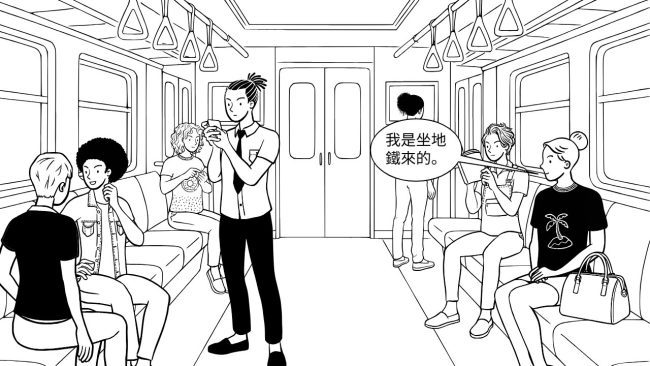
I came by metro.
(Highlighted meaning: It was by metro I came. Here the shì … de 是……的 structure highlights how the action took place.)
Note, that in affirmative sentences shì 是 can be left out of the structure. This is especially common in informal spoken language or when the emphasis is clear from context. However, de 的 must still appear to mark the emphasis.
If the sentence has an object this typically comes before de 的.
I ate dinner at home.
(Highlighted meaning: It was at home I ate dinner.)
I met her at school.
(Highlighted meaning: It was at school that I met her.)
If the object it not a pronoun such as tā 她 ‘her’ or a noun referring to people, such as lǎoshī 老師 ’teacher’, the object is sometimes placed after de 的.
I ate dinner at home.
(Highlighted meaning: It was at home I ate dinner.)
Negation
To negate a sentence with shì … de 是……的, simply put the negation adverb bù 不 before shì 是. This negation denies the specific detail being emphasised, not the whole event. Shì 是 cannot be left out of a negated sentence.
They didn’t arrive yesterday.
(Highlighted meaning: It wasn’t yesterday that they arrived. What is negated here is not the action itself (that they arrived), but the time when the action took place.)
Question
A question with the shì … de 是……的 structure is about a specific detail, such as time or place, not whether the event happened.
There are two ways to form a yes-no question. The most common way is to add the question particle ma 吗/嗎 at the end of the sentence.
Did they arrive yesterday?
(Highlighted meaning: Was it yesterday that they arrived? The question is asking confirmation about when the action took place (was it yesterday?), not whether the action (that they arrived) has taken place.)
Another way to form a yes-no question is by combining the affirmative and negative forms of the verb shì 是.
Did they arrive yesterday?
(Highlighted meaning: Was it yesterday that they arrived? The question is asking confirmation about when the action took place (was it yesterday?), not whether the action (that they arrived) has taken place.)
With adverbs
Adverbs such yě 也 ‘also’, hái 还/還 ‘still’ or dōu 都 ‘all; both’ usually comes before shì 是. However, they may sometimes appear after shì 是, depending on focus and emphasis.
They also arrived yesterday.
(Highlighted meaning: It was also yesterday that they arrived.)
They all arrived yesterday.
(Highlighted meaning: It was yesterday that they all arrived.)
With prepositional phrase
The shì … de 是……的 structure often emphasises information that is conveyed through a prepositional phrase. The prepositional phrase is placed after shì 是 and before the verb.
prepositional phrase
在学校
在學校
zài xuéxiào
We met at school.
(Highlighted meaning: It was at school that we met. Here the shì … de 是……的 structure highlights where the action took place.)
prepositional phrase
跟小李
跟小李
zài xuéxiào
I went together with Xiao Li.
(Highlighted meaning: It was together with Xiao Li that I went.)
Functions
The most common use of the shì … de 是……的 structure is to draw attention to a specific detail of an action. This can include when something happened, where it happened, how it happened, or who did the action. It is especially common when talking about past actions that are already known to have occurred, and the speaker wants to highlight or ask about a circumstance of the action.
Depending on context, this structure can be used to clarify, correct, or contrast information. The speaker uses the structure to refocus the listener’s attention on a specific part of the situation, not the action itself.
Below you can see examples the most basic functions of the shì … de 是……的 structure.
1. Shì… de 是… 的 emphasising when something happened
When placing shì 是 before a time phrase, the sentence focuses on when something happened.
我是上个星期五见到老师的。
我是上个星期五见到老师的。
Wǒ shì shàng ge Xīngqīwǔ jiàndào lǎoshī de.
I saw the teacher last Friday.
(Highlighted meaning: It was last Friday, I saw the teacher.)
A: 你是几点走的?
A: 你是幾點走的?
A: Nǐ shì jǐ diǎn zǒu de?
A: What time did you leave?
(Highlighted meaning: What time was it you left?)
B: 我是九点半走的。
B: 我是九點半走的。
B: Wǒ shì jiǔ diǎn bàn zǒu de.
I left at half past nine.
(Highlighted meaning: It was at half past nine, I left.)
A: 你们是什么时候去北京的?
A: 你們是什麼時候去北京的?
A: Nǐmen shì shénme shíhou qù Běijīng de?
A: When did you go to Beijing?
(Highlighted meaning: When was you went to Beijing?)
B: 我们是去年去北京的。
我們是去年去北京的。
B: Wǒmen shì qùnián qù Běijīng de.
B: We went to Beijing last year.
(Highlighted meaning: It was last year, we went to Beijing.)
A: 你今年 开始学中文吗?
A: 你今年 開始學中文嗎?
A: Nǐ jīnnián kāishǐ xué Zhōngwén ma?
A: Did you start learning Chinese this year?
(Highlighted meaning: Was it this year you started learning Chinese?)
B: 不是, 我是去年开始的。
B: 不是, 我是去年開始的。
B: : Bú shì, wǒ shì qùnián kāishǐ de.
B: No, I started last year.
(Highlighted meaning: No, it was last year, I started.)
2. Shì… de 是… 的 emphasising where something happened
When placing shì 是 before a location phrases, the sentence focuses on where something happened.
他们是在北京工作的。
他們是在北京工作的。
Tāmen shì zài Běijīng gōngzuò de.
They worked in Beijing.
(Highlighted meaning: It was in Beijing they worked.)
我是在超市买的。
我是在超市買的。
Wǒ shì zài chāoshì mǎi de.
I bought it at the supermarket.
(Highlighted meaning: It was at the supermarket, I brought it.)
A: 你是在哪儿学习的?
A: 你是在哪兒學習的?
A: Nǐ shì zài nǎr xuéxí de?
A: Where did you study?
(Highlighted meaning: Where was it, you studied?)
B: 我是在大学学习的。
B: 我是在大學學習的。
B: Wǒ shì zài dàxué xuéxí de.
B: I studied at the university.
(Highlighted meaning: It was the university, I studied.)
A: 老师在美国出生吗?
A: 老師在美國出生嗎?
A: Lǎoshī zài Měiguó chūshēng ma?
A: Was the teacher born in America?
(Highlighted meaning: Was it in America the teacher was born?)
B: 不是, 老师是在中国出生的。
B: 不是, 老師是在中國出生的。
B: Bú shì, lǎoshī shì zài Zhōngguó chūshēng de.
B: No, the teacher was born in China.
(Highlighted meaning: No, it was in China, the teacher was born.)
3. Shì… de 是… 的 emphasising how something happened
When placing shì 是 before phrase that explains the manner the action is carried out, the sentence focuses on how something happened.
我是用电脑写的。
我是用電腦寫的。
Wǒ shì yòng diànnǎo xiě de.
I wrote it on my computer.
(Highlighted meaning: It was on my computer, I wrote this.)
我是上网知道的。
我是上網知道的。
Wǒ shì shàng wǎng zhīdao de.
I found out about it online.
(Highlighted meaning: It was online, I found out about it.)
A: 他们是怎么来的?
A: 他們是怎麼來的?
A: Tāmen shì zěnme lái de?
A: How did they get there?
(Highlighted meaning: How was it they gor here?)
B: 他们是坐火车来的。
B: 他們是坐火車來的。
B: Tāmen shì zuò huǒchē lái de.
B: They came by train.
(Highlighted meaning: It was by train, they came.)
我不是一个人去的,我是跟小王去的。
我不是一個人去的,我是跟小王去的。
Wǒ bú shì yí ge rén qù de, wǒ shì gēn Xiǎo Wáng qù de.
I didn’t go alone, I went with Xiao Wang.
(Highlighted meaning: I didn’t go alone, it was with Xiao Wang, that I went.)
4. Shì… de 是… 的 emphasising who did the action
The shì … de 是……的 structure can highlight who did the action. Shì 是 is placed before the person or persons who did the action. This is often used to clarify, correct, or specify responsibility or involvement.
这本书是小李写的。
這本書是小李寫的。
Zhè běn shū shì Xiǎo Lǐ xiě de.
The book was written by Xiao Li.
(Highlighted meaning: Xiao Li was the one who wrote this book.)
菜是爸爸做的。
菜是爸爸做的。
Cài shì bàba zuò de.
The food was made by Dad.
(Highlighted meaning: It was Dad who made the food.)
是我告诉老师的,不是你。
是我告訴老師的,不是你。
Shì wǒ gàosu lǎoshī de, bú shì nǐ.
I told the teacher, not you.
(Highlighted meaning: It was me who told the teacher, not you.)
不是妈妈买的。
不是媽媽買的
Bú shì māma mǎi de.
Mum didn't buy it.
(Highlighted meaning: It wasn’t mum who brought it.)


 en
en cs
cs da
da de
de it
it pl
pl