Menu

也
也
yě
adverb

‘also, too’
HSK1 TBCL2

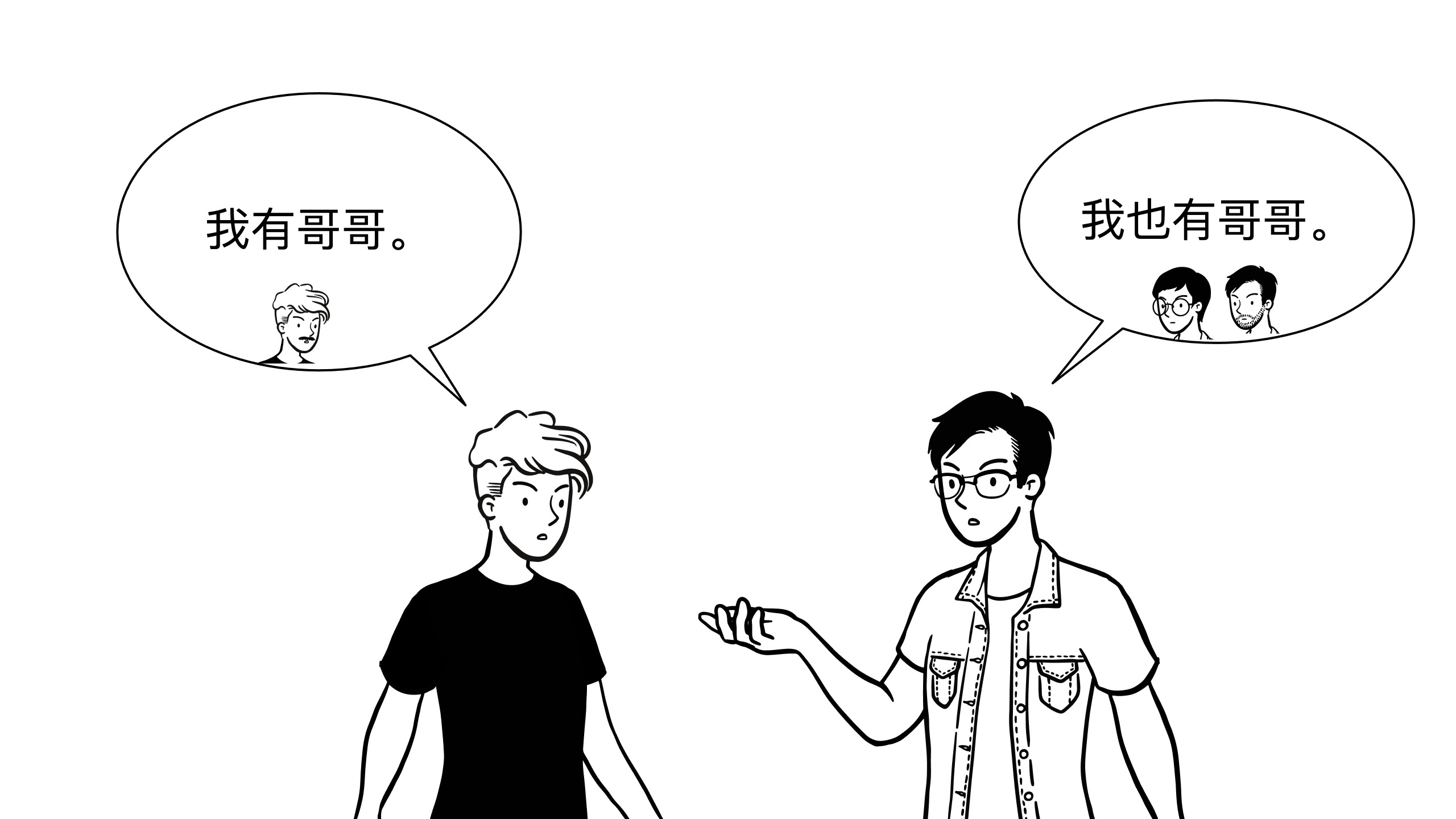
Yě 也 is an adverb that always precedes the main verb or adjective in a sentence. Corresponding to English ‘also, too,’ it is used to indicate sameness.
UBER Adverb ye UBER Adverb ye

Structure

Basic form

The adverb yě 也 is placed before the main verb or adjective.

Subject
我
我
Wǒ
也
也
也
yě
verb
有
有
yǒu
object
哥哥。
哥哥。
gēge.
I also have a brother/brothers.
Subject
爸爸
爸爸
Bàba
也
也
也
yě
adjective
忙。
忙。
máng.
My father is also busy.

Negation

When co-occurring with a negative adverb such as méi 没 ‘not’ or bù 不 ‘not,’ yě 也 is placed before it.

Subject
我
我
Wǒ
也
也
也
yě
negation verb
没
没
méi
verb
有
有
yǒu
object
哥哥。
哥哥。
gēge.
I don’t have a brother/brothers, either.
Subject
他
他
Tā
也
也
也
yě
negation verb
不
不
bù
verb
吃
吃
chī
object
午饭。
午飯。
wǔfàn.
He doesn’t have lunch, either.
Subject
他们
他們
Tāmen
也
也
也
yě
negation adverb
不
不
bú
adjective
累。
累。
lèi.
They are also not tired.

Question

The adverb yě 也 usually occurs in Yes-No questions, for example those ending with the question particle ma 吗/嗎.

Subject
你
你
Nǐ
也
也
也
yě
verb
去
去
qù
object
学校
學校
xuéxiào
吗/嗎?
吗?
嗎?
ma?
Do you also go to the school?
Subject
他
他
Tā
也
也
也
yě
adjective
冷
冷
lěng
吗/嗎?
吗?
嗎?
ma?
Does he also feel cold?

With modal verbs and other adverbs

If there is a modal verb in a sentence, yě 也 is usually placed before the modal verb.

Subject
他们
他們
Tāmen
也
也
也
yě
modal verb
想
想
xiǎng
verb
学
學
xué
object
英语。
英語。
Yīngyǔ.
They also want to learn English.

If a sentence contains not only the adverb yě 也 ‘also’, but also other adverbs such as dōu 都 ‘all’, zhǐ 只 ‘only’, or adverbs of degree like hěn 很 ‘very’, their order is as follows:

Subject
他们
他們
Tāmen
也
也
也
yě
都
都
都
dōu
很
很
很
hěn
modal verb
想
想
xiǎng
verb
学
學
xué
object
英语。
英語。
Yīngyǔ.
They all really want to learn English, too.
Subject
我们
我們
Wǒmen
也
也
也
yě
都
都
都
dōu
只
只
只
zhǐ
modal verb
会
會
huì
verb
说
說
shuō
object
中文。
中文。
Zhōngwén.
All of us can only speak Chinese, too.

With prepositional phrases

Yě 也 should be placed before the prepositional phrase.

Subject
我
我
Wǒ
也
也
也
yě
prepositional phrase
给她
給她
gěi tā
verb
打
打
dǎ
object
电话。
電話。
diànhuà.
I also call her.
Subject
我
我
Wǒ
也
也
也
yě
modal verb
想
想
xiǎng
prepositional phrase
跟他
跟他
gēn tā
verb
吃
吃
chī
object
午饭。
午飯。
wǔfàn.
I also want to have lunch with him.

Functions

 Yě 也 indicating sameness

Yě 也 is often used to indicate that something is identical or comparable to a previously mentioned thing or statement.

那个学生读中文书,也读英文书。
那個學生讀中文書,也讀英文書。
Nà ge xuésheng dú Zhōngwén shū,yě dú Yīngwén shū. 
That student reads Chinese books, and he also reads English books.
我哥哥高,我弟弟也高。
我哥哥高,我弟弟也高。
Wǒ gēge gāo, wǒ dìdi yě gāo.
My elder brother is tall, and my younger brother is tall, too.
姐姐不想去旅行,我也不想去。
姐姐不想去旅行,我也不想去。
Jiějie bù xiǎng qù lǚxíng, wǒ yě bù xiǎng qù.
My elder sister doesn’t want to go travelling, neither do I.

When yě 也 is used in a second clause, it cannot stand alone but occurs only in combination with an adjective, a verb, or a modal verb. It cannot be placed at the end of a sentence, either. In such sentences, a verb follows yě 也 in the second clause.

我喜欢看书,他也喜欢。
我喜歡看書,他也喜歡。
Wǒ xǐhuan kàn shū, tā yě xǐhuan.
I like reading and so does he.

In this example, omitting xǐhuan 喜欢/喜歡 at the end of the second clause would be incorrect.

The phrase wǒ yě shì 我也是 ‘me too, same here’ is a commonly used, fixed response. For example:

A: 我觉得很冷。
A: 我覺得很冷。
Wǒ juéde hěn lěng.
I feel cold.
B: 我也是。(= 我也觉得)
B: 我也是。(= 我也覺得)
Wǒ yě shì. (=Wǒ yě juéde)
Me too. (= I feel so, too.)
A: 我想喝牛奶。
A: 我想喝牛奶。
Wǒ xiǎng hē niúnǎi.
I would like to have some milk.
B: 我也是。(= 我也想喝)
B: 我也是。(= 我也想喝)
Wǒ yě shì. (= Wǒ yě xiǎng hē)
Same here. (= I also want to have some milk.)